


welcome to the BLOG
This is where we share all the wedding planning secrets - including how to nurture your relationships and yourself throughout your planning journey!
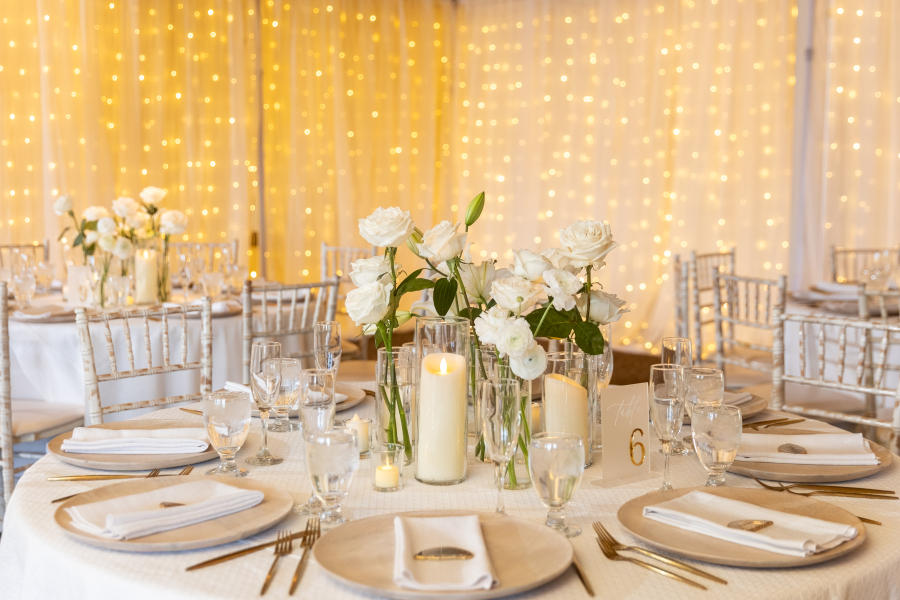
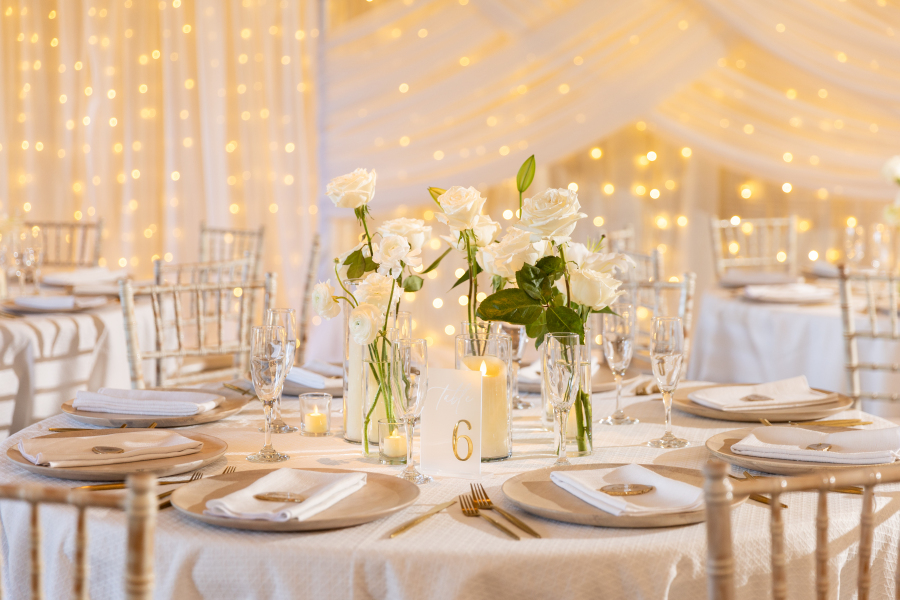
Plated, Buffet, Family Style, or Stations? How to Choose the Right Wedding Meal Service Style
When couples begin planning their wedding menu, they usually start by thinking about the food.
What should we serve?
How many entrée choices should we offer?
Do we need a vegetarian option?
Should we include appetizers?
Those are all important questions—but there is another decision that can have an equally significant impact on the guest experience:
How will the meal be served?
Your wedding meal service style influences much more than how food arrives at the table. It affects the atmosphere of the reception, the event timeline, staffing needs, rental requirements, guest movement, and sometimes the overall catering budget.
The best service style is not necessarily the most formal, the most affordable, or the most popular. It is the one that best supports your priorities, venue, guest count, menu, and the experience you want to create.
Let’s walk through the most common wedding meal service styles and how to determine which one may be right for your celebration.
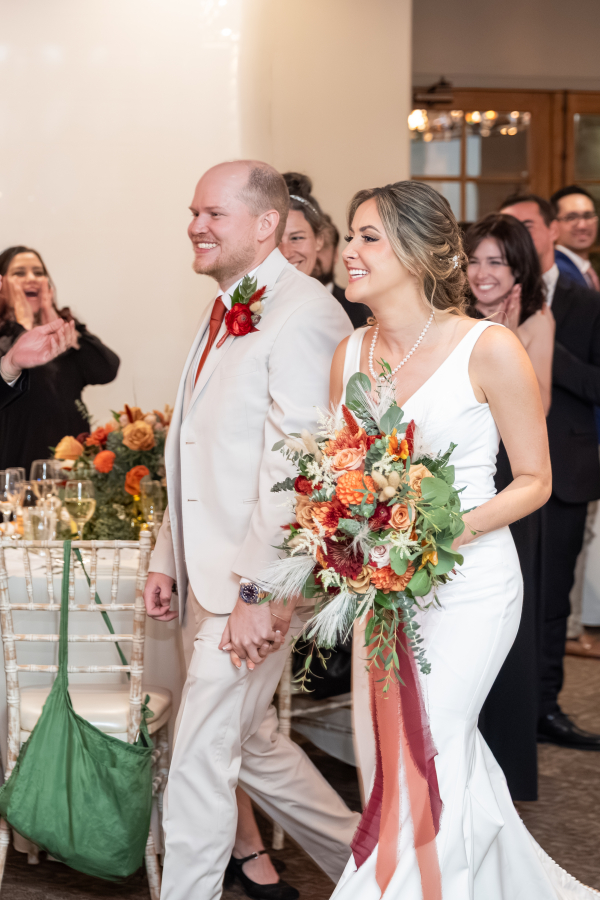
Begin With the Experience You Want to Create
Before comparing plated dinners, buffets, family-style meals, or food stations, ask yourselves one simple question:
How do we want dinner to feel?
Do you imagine a polished, elegant meal where guests remain seated and are carefully served?
Would you prefer a relaxed and welcoming atmosphere where guests can choose their own portions?
Do you want dinner to feel communal, with guests passing dishes and sharing food around the table?
Would you rather create an interactive reception where guests move between stations and sample different flavors?
There is no universally correct answer. Your service style should reflect the tone of your wedding.
A formal ballroom wedding may feel especially cohesive with a plated dinner. A relaxed outdoor celebration may work beautifully with a thoughtfully designed buffet. A long-table dinner may lend itself to family-style service, while a lively cocktail-inspired reception may be ideal for stations and substantial hors d’oeuvres.
Start with the feeling, then consider the logistics.
Option One: Plated Dinner Service
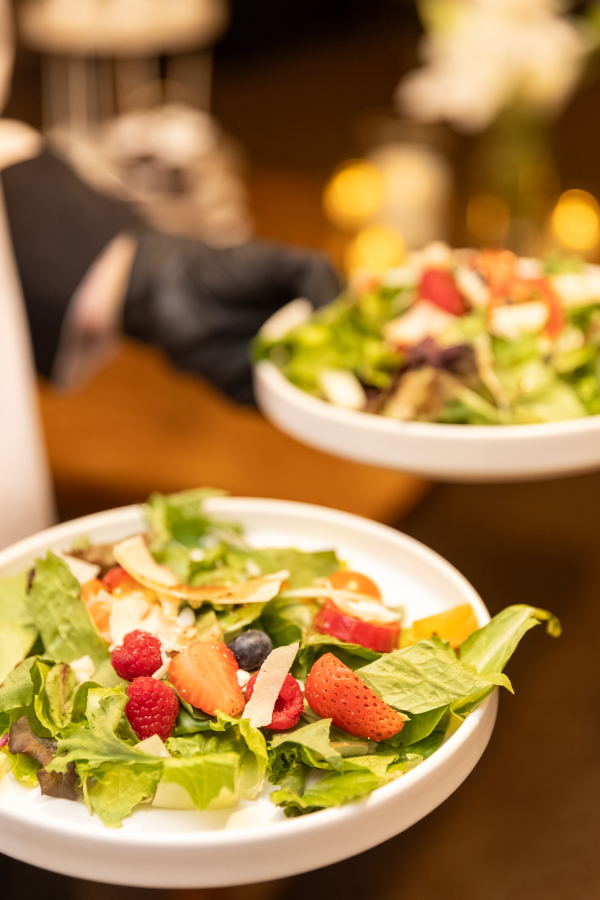
A plated dinner is one of the most traditional wedding meal service styles. Guests remain seated while servers deliver individually prepared courses to each place setting.
A plated meal may include a preset salad, one main entrée for everyone, or multiple entrée selections collected through the RSVP process.
A plated dinner may be right for you when:
- You want the reception to feel elegant, formal, or highly organized.
- You would like guests to remain seated throughout dinner.
- Your venue has sufficient kitchen and service capabilities.
- You have a structured reception timeline with speeches, toasts, or formalities during the meal.
- You want portion sizes and presentation to remain consistent.
- Your guest count and catering team can support the required level of service.
Benefits of plated service
Plated service can create a polished and elevated dining experience. Guests do not need to stand in line or carry plates back to their seats, and the catering team has greater control over presentation and portioning.
It can also make it easier to incorporate toasts, speeches, and formal reception moments because most guests remain seated.
Considerations for plated service
A plated meal usually requires more service staff than a buffet, particularly when serving a large guest count efficiently.
Your catering team will also need accurate meal selections, seating assignments, and a reliable way to identify each guest’s entrée choice. This may require place cards, escort cards, meal-indicator symbols, or a detailed seating chart.
Plated service can also take longer when multiple courses are included or when the venue has limited access between the kitchen and reception area.
If you choose plated service, ask your caterer how long they anticipate each course taking and how meal selections should be communicated.
Option Two: Buffet Service
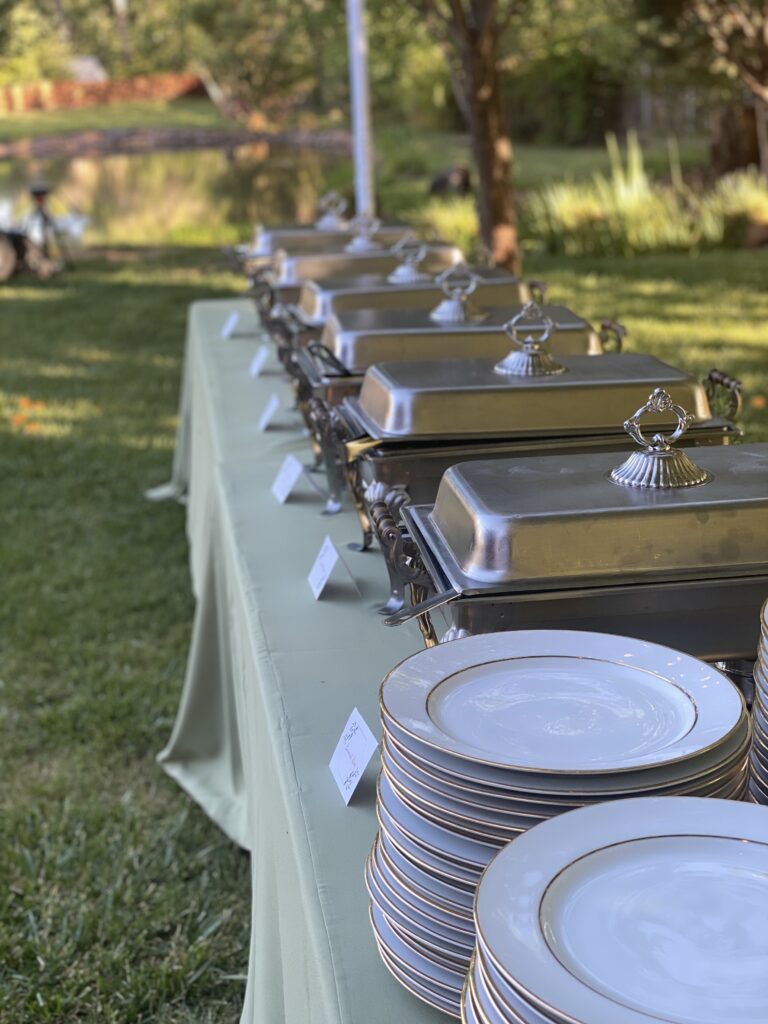
With buffet service, food is arranged on one or more serving tables, and guests move through the buffet to select their meal.
The catering team may serve some items, or the buffet may be partially self-serve depending on the menu and event setup.
A buffet may be right for you when:
- You want guests to have flexibility and variety.
- You prefer a relaxed or approachable dining atmosphere.
- You would like guests to choose their own portions.
- You want to offer several entrée or side options without collecting meal choices in advance.
- Your venue has enough room for an efficient buffet setup.
- Your timeline can accommodate releasing tables in organized groups.
Benefits of buffet service
Buffets give guests more control over what and how much they place on their plates. They can be especially helpful when offering a variety of proteins, sides, sauces, or dietary options.
A buffet can also eliminate the need to collect individual entrée selections during the RSVP process.
When designed well, a buffet can still feel beautiful, intentional, and elevated. Attractive serving pieces, thoughtful signage, professional attendants, and a well-planned layout can make the buffet part of the event design.
Considerations for buffet service
Guest flow is one of the most important factors in a successful buffet.
For larger weddings, a single buffet line can create a lengthy wait. Your caterer may recommend a double-sided buffet, duplicate stations, or multiple service points to move guests through efficiently.
You will also need a plan for releasing tables. Allowing every guest to approach the buffet at once can quickly create congestion.
Buffet tables also require space within the venue. Make sure the layout leaves enough room for guests to move comfortably without crowding dining tables, the bar, or major walkways.
A buffet is not automatically less expensive than a plated dinner. Pricing depends on the menu, staffing, equipment, quantity of food, venue layout, and service requirements.
Option Three: Family-Style Dinner
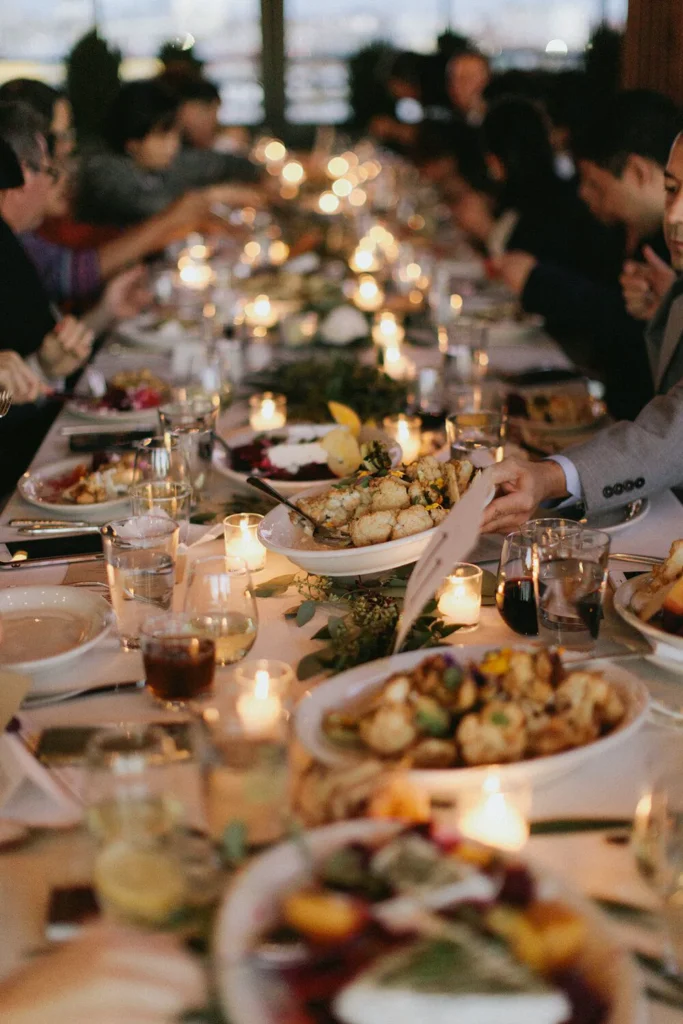
Family-style dining combines elements of plated and buffet service. Guests remain seated while large platters and bowls are delivered to each table. Guests then pass the dishes and serve themselves.
This service style can feel warm, abundant, and communal.
Family-style service may be right for you when:
- You want dinner to feel intimate, social, and welcoming.
- You love the idea of guests sharing food around the table.
- Your menu includes dishes that can be presented and passed easily.
- You have enough room on each table for serving platters.
- You are comfortable with guests determining their own portions.
- Your catering and rental budgets can accommodate additional serving pieces and staffing.
Benefits of family-style service
Family-style dining encourages conversation and interaction. It can create the feeling of a shared dinner party, even at a larger wedding.
Guests can sample multiple dishes without leaving their seats, and the presentation of abundant platters can feel especially inviting.
It works beautifully for rustic, Italian-inspired, Mediterranean, farm-to-table, or relaxed luxury celebrations, although it can be adapted to many different wedding styles.
Considerations for family-style service
Table space is often the biggest challenge.
Large floral arrangements, candles, glassware, chargers, bread plates, favors, and serving platters all compete for room. Before choosing family style, your planner, caterer, florist, and rental company should confirm that the table design can accommodate the meal.
You may need to simplify centerpieces, use wider tables, or reduce the number of decorative items at each place setting.
Family-style service may also require more food than plated service because each table needs enough of every dish. Additional platters, bowls, serving utensils, and staff may also affect the cost.
This style works best when guests are comfortable passing dishes. It may be less practical for guests with mobility limitations, very formal place settings, or tightly packed tables.
Option Four: Food Stations
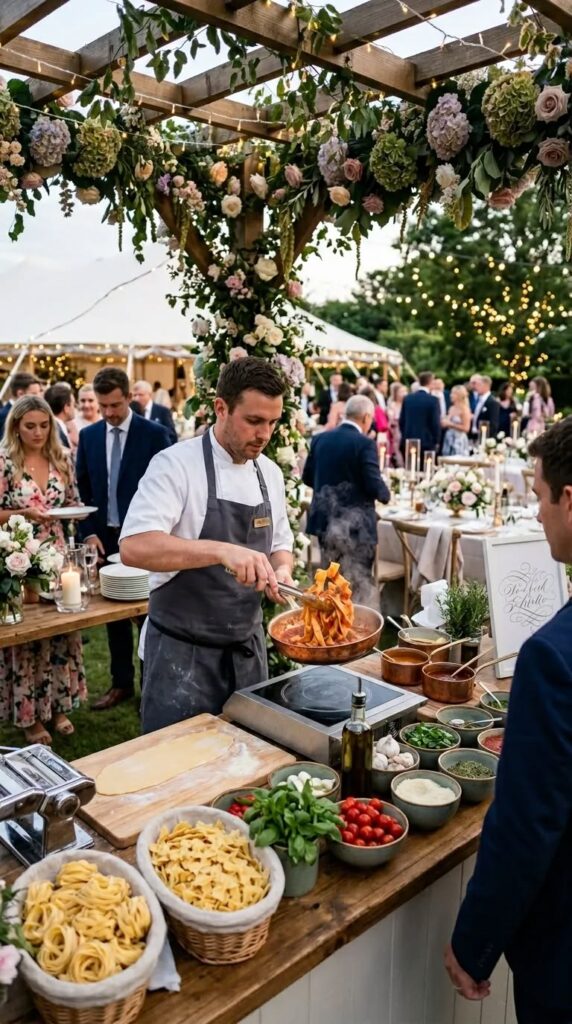
Food stations feature several smaller serving areas placed throughout the reception. Each station may offer a different cuisine, dish, or experience.
Examples might include a carving station, pasta station, taco station, slider station, seafood station, salad station, or made-to-order culinary display.
Food stations may be right for you when:
- You want dinner to feel interactive and energetic.
- You would like to offer several cuisines or menu experiences.
- You prefer a less structured reception.
- Your venue has enough room to distribute stations thoughtfully.
- You want guests to mingle during the meal.
- Your guest count supports multiple stations without excessive waiting.
Benefits of food stations
Stations can turn the meal into an experience. Guests can explore the room, choose what interests them, and return for additional selections.
They can also help accommodate a wide range of preferences by providing variety.
When positioned strategically, multiple stations can reduce the appearance of one long buffet line and encourage guests to use different areas of the reception space.
Considerations for food stations
Stations require careful planning. If one station is significantly more popular than the others, guests may still experience long waits.
The menu must also be substantial enough to constitute a full meal. A collection of small bites may sound plentiful on paper but leave guests hungry if quantities and portion sizes are not carefully calculated.
Some stations require chefs or attendants, specialty equipment, power access, ventilation, or additional rentals. Those elements can increase staffing and production costs.
Your planner and caterer should also consider whether the stations will remain open for a set period or throughout most of the reception.
Option Five: Heavy Hors d’Oeuvres or Cocktail-Style Reception
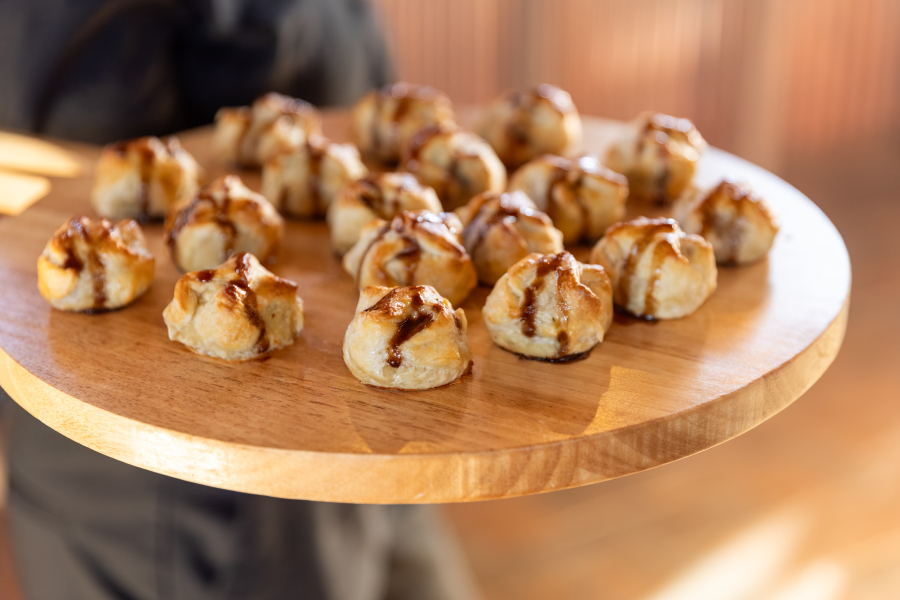
A heavy hors d’oeuvres reception replaces a traditional seated meal with a substantial selection of passed appetizers, displayed bites, small plates, or food stations.
The key word is heavy. If the reception takes place during a normal meal period, guests will expect enough food to feel fully satisfied.
A cocktail-style reception may be right for you when:
- You want a lively, social, and less traditional celebration.
- You prefer mingling over a long seated dinner.
- Your menu includes a wide variety of substantial small bites.
- Your venue is well suited for lounges, cocktail tables, and flexible seating.
- You plan to offer enough food throughout the reception.
- You are comfortable with a less structured meal period.
Benefits of a cocktail-style reception
This format encourages guests to move, socialize, and experience different areas of the event.
It can be especially effective for shorter weddings, modern celebrations, art-gallery venues, rooftop events, or receptions centered around entertainment and conversation.
The menu can also be creative and varied, allowing you to incorporate several flavors without committing to a traditional entrée.
Considerations for a cocktail-style reception
Do not assume that a cocktail-style reception automatically requires less food or costs less than dinner.
Passed appetizers are labor-intensive, and producing many small items can require significant preparation and staffing. If stations, displays, rentals, and attendants are added, the cost may be similar to—or greater than—a traditional meal.
You must also provide enough seating. Even when the goal is mingling, older guests, pregnant guests, guests with disabilities, and anyone wearing formal shoes may want to sit.
A mixture of dining tables, lounge furniture, cocktail tables, and standard chairs usually creates the most comfortable experience.
Be clear in your invitation wording and wedding communication so guests understand what type of meal to expect.
Questions to Ask Before Choosing Your Service Style
Once you understand the basic options, evaluate each one through the lens of your actual event.
1. What is our wedding atmosphere?
A black-tie celebration, casual backyard wedding, destination weekend, and modern cocktail reception may each call for a different dining experience.
Your meal service should feel consistent with the rest of the event.
2. How many guests are we inviting?
A service style that works beautifully for 40 guests may become challenging for 200 guests.
Ask your caterer how they would manage your specific guest count. For example, a large buffet may require duplicate lines, while plated service may require a larger team to serve everyone promptly.
3. What does our venue allow?
Your venue may affect the decision more than you expect.
Consider:
- Kitchen access
- Distance between the kitchen and reception space
- Available power
- Indoor and outdoor access
- Weather backup plans
- Space for buffets or stations
- Table sizes
- Loading and service routes
- Venue rules regarding open flames or live cooking
A beautiful idea still needs to function within the venue.
4. What type of menu are we serving?
Some dishes are ideal for plated service, while others hold especially well on a buffet or are naturally suited to family-style presentation.
Ask your caterer how each menu item performs over time. Foods that need to remain crisp, delicate, or precisely cooked may require a different service approach than braised meats, roasted vegetables, pastas, or composed salads.
5. How important is guest choice?
Do you want guests to choose between several options, or are you comfortable serving one thoughtfully selected meal?
Buffets and stations provide flexibility. Plated dinners offer consistency. Family style allows guests to sample several dishes, although quantities are shared among the table.
6. How formal do we want dinner to feel?
Formality is not only determined by food.
Service style, linens, place settings, table design, staff attire, menu presentation, and the timing of each course all contribute to the feeling of the meal.
A buffet can still be elegant, and a plated dinner can still feel relaxed. Consider the full picture rather than relying on labels.
7. What is realistic for our budget?
Ask your catering team for the complete cost of each service style—not only the price of the food.
The final investment may include:
- Servers
- Chefs
- Bartenders
- Captains
- China
- Flatware
- Glassware
- Linens
- Buffet tables
- Serving pieces
- Chafing equipment
- Specialty equipment
- Setup
- Breakdown
- Transportation
- Rentals
- Gratuity or service charges
Comparing complete proposals will give you a much clearer picture.
8. How does the service style affect our timeline?
Every service style requires time.
A plated multi-course dinner may take longer than a single-course meal. A buffet must be released table by table. Family-style platters need to be placed and replenished. Stations may remain open for a longer dining window.
Ask how the meal will interact with:
- Toasts
- First dances
- Parent dances
- Sunset photos
- Cake cutting
- Entertainment
- Transportation
- Venue end times
Your meal should support the reception flow rather than interrupt it.
9. What will be most comfortable for our guests?
Consider the ages, mobility needs, dietary restrictions, and expectations of your guests.
A service style that requires standing in line or balancing small plates may be difficult for some attendees. A long plated dinner may feel too formal for others.
Guest comfort does not mean you must abandon your vision. It simply means creating a thoughtful plan.
Can You Combine Service Styles?
Absolutely.
Many weddings use a combination of service styles to create variety and support the event timeline.
For example:
- Passed hors d’oeuvres during cocktail hour followed by a plated dinner
- A plated salad followed by a buffet entrée
- Family-style dinner with a plated dessert
- Food stations for dinner followed by a late-night snack display
- A buffet with chef-attended carving or pasta stations
- A cocktail-style reception with passed appetizers and two substantial food stations
A hybrid approach can provide the best features of several formats. It can also create additional complexity, so make sure your planner and catering team coordinate the flow carefully.
Common Mistakes to Avoid
Choosing based only on price
The least expensive-looking option is not always the least expensive once staffing, rentals, food quantities, and equipment are included.
Forgetting about the venue layout
Buffets and stations need physical space. Family-style service needs table space. Plated service needs efficient access from the kitchen.
Underestimating the timeline
Serving a large number of guests takes time, regardless of the format. Build realistic service time into the reception schedule.
Offering too many choices
More options do not always create a better experience. An overly large menu may increase cost, complicate service, and slow down the meal.
A focused, well-executed menu is often more memorable than an extensive one.
Not providing enough seating
Cocktail-style does not mean seat-free. Guests need comfortable places to rest and eat.
Failing to communicate dietary restrictions
Your caterer should receive dietary information well before the wedding. Make sure there is a clear plan for identifying and serving guests with allergies or special meal needs.
So, Which Wedding Service Style Is Best?
The right choice is the one that supports your celebration as a whole.
Choose plated service when you want a polished, structured, and seated dining experience.
Choose a buffet when variety, flexibility, and a relaxed atmosphere are important.
Choose family style when you want dinner to feel warm, abundant, and communal.
Choose food stations when you want an interactive experience with multiple flavors and opportunities for movement.
Choose a heavy hors d’oeuvres reception when you want a social, cocktail-inspired celebration and are prepared to provide enough substantial food and seating.
Most importantly, involve your caterer and planner in the decision. They can help you evaluate your menu, venue, guest count, budget, and timeline so your service style is not only beautiful in theory, but successful in practice.
Your wedding meal should feel like a natural extension of your celebration—delicious, welcoming, and thoughtfully designed around the people gathered to celebrate with you.
Need Help Planning the Rest of Your Wedding?
Choosing your catering style is only one of the many decisions that will shape your wedding experience.
Inside the Master the Wedding community, couples can follow a step-by-step Wedding Roadmap with professional guidance, planning tools, educational resources, and support for decisions involving the budget, guest list, venue, vendors, design, timeline, and wedding-day logistics.
And when you are ready to explore catering options for your Arizona wedding or event, we would love to learn more about what you are planning.

Casey Green Weddings, LLC
hello@caseygreenweddings.com
READ THE LATEST
Plated, Buffet, Family Style, or Stations? How to Choose the Right Wedding Meal Service Style
When couples begin planning their wedding menu, they usually start by thinking about the food.
What should we serve?
How many entrée choices should we offer?
Do we need a vegetarian option?
Should we include appetizers?
Those are all important questions—but there is another decision that can have an equally significant impact on the guest experience:
How will the meal be served?
Your wedding meal service style influences much more than how food arrives at the table. It affects the atmosphere of the reception, the event timeline, staffing needs, rental requirements, guest movement, and sometimes the overall catering budget.
The best service style is not necessarily the most formal, the most affordable, or the most popular. It is the one that best supports your priorities, venue, guest count, menu, and the experience you want to create.
Let’s walk through the most common wedding meal service styles and how to determine which one may be right for your celebration.
Begin With the Experience You Want to Create
Before comparing plated dinners, buffets, family-style meals, or food stations, ask yourselves one simple question:
How do we want dinner to feel?
Do you imagine a polished, elegant meal where guests remain seated and are carefully served?
Would you prefer a relaxed and welcoming atmosphere where guests can choose their own portions?
Do you want dinner to feel communal, with guests passing dishes and sharing food around the table?
Would you rather create an interactive reception where guests move between stations and sample different flavors?
There is no universally correct answer. Your service style should reflect the tone of your wedding.
A formal ballroom wedding may feel especially cohesive with a plated dinner. A relaxed outdoor celebration may work beautifully with a thoughtfully designed buffet. A long-table dinner may lend itself to family-style service, while a lively cocktail-inspired reception may be ideal for stations and substantial hors d’oeuvres.
Start with the feeling, then consider the logistics.
Option One: Plated Dinner Service
A plated dinner is one of the most traditional wedding meal service styles. Guests remain seated while servers deliver individually prepared courses to each place setting.
A plated meal may include a preset salad, one main entrée for everyone, or multiple entrée selections collected through the RSVP process.
A plated dinner may be right for you when:
- You want the reception to feel elegant, formal, or highly organized.
- You would like guests to remain seated throughout dinner.
- Your venue has sufficient kitchen and service capabilities.
- You have a structured reception timeline with speeches, toasts, or formalities during the meal.
- You want portion sizes and presentation to remain consistent.
- Your guest count and catering team can support the required level of service.
Benefits of plated service
Plated service can create a polished and elevated dining experience. Guests do not need to stand in line or carry plates back to their seats, and the catering team has greater control over presentation and portioning.
It can also make it easier to incorporate toasts, speeches, and formal reception moments because most guests remain seated.
Considerations for plated service
A plated meal usually requires more service staff than a buffet, particularly when serving a large guest count efficiently.
Your catering team will also need accurate meal selections, seating assignments, and a reliable way to identify each guest’s entrée choice. This may require place cards, escort cards, meal-indicator symbols, or a detailed seating chart.
Plated service can also take longer when multiple courses are included or when the venue has limited access between the kitchen and reception area.
If you choose plated service, ask your caterer how long they anticipate each course taking and how meal selections should be communicated.
Option Two: Buffet Service
With buffet service, food is arranged on one or more serving tables, and guests move through the buffet to select their meal.
The catering team may serve some items, or the buffet may be partially self-serve depending on the menu and event setup.
A buffet may be right for you when:
- You want guests to have flexibility and variety.
- You prefer a relaxed or approachable dining atmosphere.
- You would like guests to choose their own portions.
- You want to offer several entrée or side options without collecting meal choices in advance.
- Your venue has enough room for an efficient buffet setup.
- Your timeline can accommodate releasing tables in organized groups.
Benefits of buffet service
Buffets give guests more control over what and how much they place on their plates. They can be especially helpful when offering a variety of proteins, sides, sauces, or dietary options.
A buffet can also eliminate the need to collect individual entrée selections during the RSVP process.
When designed well, a buffet can still feel beautiful, intentional, and elevated. Attractive serving pieces, thoughtful signage, professional attendants, and a well-planned layout can make the buffet part of the event design.
Considerations for buffet service
Guest flow is one of the most important factors in a successful buffet.
For larger weddings, a single buffet line can create a lengthy wait. Your caterer may recommend a double-sided buffet, duplicate stations, or multiple service points to move guests through efficiently.
You will also need a plan for releasing tables. Allowing every guest to approach the buffet at once can quickly create congestion.
Buffet tables also require space within the venue. Make sure the layout leaves enough room for guests to move comfortably without crowding dining tables, the bar, or major walkways.
A buffet is not automatically less expensive than a plated dinner. Pricing depends on the menu, staffing, equipment, quantity of food, venue layout, and service requirements.
Option Three: Family-Style Dinner
Family-style dining combines elements of plated and buffet service. Guests remain seated while large platters and bowls are delivered to each table. Guests then pass the dishes and serve themselves.
This service style can feel warm, abundant, and communal.
Family-style service may be right for you when:
- You want dinner to feel intimate, social, and welcoming.
- You love the idea of guests sharing food around the table.
- Your menu includes dishes that can be presented and passed easily.
- You have enough room on each table for serving platters.
- You are comfortable with guests determining their own portions.
- Your catering and rental budgets can accommodate additional serving pieces and staffing.
Benefits of family-style service
Family-style dining encourages conversation and interaction. It can create the feeling of a shared dinner party, even at a larger wedding.
Guests can sample multiple dishes without leaving their seats, and the presentation of abundant platters can feel especially inviting.
It works beautifully for rustic, Italian-inspired, Mediterranean, farm-to-table, or relaxed luxury celebrations, although it can be adapted to many different wedding styles.
Considerations for family-style service
Table space is often the biggest challenge.
Large floral arrangements, candles, glassware, chargers, bread plates, favors, and serving platters all compete for room. Before choosing family style, your planner, caterer, florist, and rental company should confirm that the table design can accommodate the meal.
You may need to simplify centerpieces, use wider tables, or reduce the number of decorative items at each place setting.
Family-style service may also require more food than plated service because each table needs enough of every dish. Additional platters, bowls, serving utensils, and staff may also affect the cost.
This style works best when guests are comfortable passing dishes. It may be less practical for guests with mobility limitations, very formal place settings, or tightly packed tables.
Option Four: Food Stations
Food stations feature several smaller serving areas placed throughout the reception. Each station may offer a different cuisine, dish, or experience.
Examples might include a carving station, pasta station, taco station, slider station, seafood station, salad station, or made-to-order culinary display.
Food stations may be right for you when:
- You want dinner to feel interactive and energetic.
- You would like to offer several cuisines or menu experiences.
- You prefer a less structured reception.
- Your venue has enough room to distribute stations thoughtfully.
- You want guests to mingle during the meal.
- Your guest count supports multiple stations without excessive waiting.
Benefits of food stations
Stations can turn the meal into an experience. Guests can explore the room, choose what interests them, and return for additional selections.
They can also help accommodate a wide range of preferences by providing variety.
When positioned strategically, multiple stations can reduce the appearance of one long buffet line and encourage guests to use different areas of the reception space.
Considerations for food stations
Stations require careful planning. If one station is significantly more popular than the others, guests may still experience long waits.
The menu must also be substantial enough to constitute a full meal. A collection of small bites may sound plentiful on paper but leave guests hungry if quantities and portion sizes are not carefully calculated.
Some stations require chefs or attendants, specialty equipment, power access, ventilation, or additional rentals. Those elements can increase staffing and production costs.
Your planner and caterer should also consider whether the stations will remain open for a set period or throughout most of the reception.
Option Five: Heavy Hors d’Oeuvres or Cocktail-Style Reception
A heavy hors d’oeuvres reception replaces a traditional seated meal with a substantial selection of passed appetizers, displayed bites, small plates, or food stations.
The key word is heavy. If the reception takes place during a normal meal period, guests will expect enough food to feel fully satisfied.
A cocktail-style reception may be right for you when:
- You want a lively, social, and less traditional celebration.
- You prefer mingling over a long seated dinner.
- Your menu includes a wide variety of substantial small bites.
- Your venue is well suited for lounges, cocktail tables, and flexible seating.
- You plan to offer enough food throughout the reception.
- You are comfortable with a less structured meal period.
Benefits of a cocktail-style reception
This format encourages guests to move, socialize, and experience different areas of the event.
It can be especially effective for shorter weddings, modern celebrations, art-gallery venues, rooftop events, or receptions centered around entertainment and conversation.
The menu can also be creative and varied, allowing you to incorporate several flavors without committing to a traditional entrée.
Considerations for a cocktail-style reception
Do not assume that a cocktail-style reception automatically requires less food or costs less than dinner.
Passed appetizers are labor-intensive, and producing many small items can require significant preparation and staffing. If stations, displays, rentals, and attendants are added, the cost may be similar to—or greater than—a traditional meal.
You must also provide enough seating. Even when the goal is mingling, older guests, pregnant guests, guests with disabilities, and anyone wearing formal shoes may want to sit.
A mixture of dining tables, lounge furniture, cocktail tables, and standard chairs usually creates the most comfortable experience.
Be clear in your invitation wording and wedding communication so guests understand what type of meal to expect.
Questions to Ask Before Choosing Your Service Style
Once you understand the basic options, evaluate each one through the lens of your actual event.
1. What is our wedding atmosphere?
A black-tie celebration, casual backyard wedding, destination weekend, and modern cocktail reception may each call for a different dining experience.
Your meal service should feel consistent with the rest of the event.
2. How many guests are we inviting?
A service style that works beautifully for 40 guests may become challenging for 200 guests.
Ask your caterer how they would manage your specific guest count. For example, a large buffet may require duplicate lines, while plated service may require a larger team to serve everyone promptly.
3. What does our venue allow?
Your venue may affect the decision more than you expect.
Consider:
- Kitchen access
- Distance between the kitchen and reception space
- Available power
- Indoor and outdoor access
- Weather backup plans
- Space for buffets or stations
- Table sizes
- Loading and service routes
- Venue rules regarding open flames or live cooking
A beautiful idea still needs to function within the venue.
4. What type of menu are we serving?
Some dishes are ideal for plated service, while others hold especially well on a buffet or are naturally suited to family-style presentation.
Ask your caterer how each menu item performs over time. Foods that need to remain crisp, delicate, or precisely cooked may require a different service approach than braised meats, roasted vegetables, pastas, or composed salads.
5. How important is guest choice?
Do you want guests to choose between several options, or are you comfortable serving one thoughtfully selected meal?
Buffets and stations provide flexibility. Plated dinners offer consistency. Family style allows guests to sample several dishes, although quantities are shared among the table.
6. How formal do we want dinner to feel?
Formality is not only determined by food.
Service style, linens, place settings, table design, staff attire, menu presentation, and the timing of each course all contribute to the feeling of the meal.
A buffet can still be elegant, and a plated dinner can still feel relaxed. Consider the full picture rather than relying on labels.
7. What is realistic for our budget?
Ask your catering team for the complete cost of each service style—not only the price of the food.
The final investment may include:
- Servers
- Chefs
- Bartenders
- Captains
- China
- Flatware
- Glassware
- Linens
- Buffet tables
- Serving pieces
- Chafing equipment
- Specialty equipment
- Setup
- Breakdown
- Transportation
- Rentals
- Gratuity or service charges
Comparing complete proposals will give you a much clearer picture.
8. How does the service style affect our timeline?
Every service style requires time.
A plated multi-course dinner may take longer than a single-course meal. A buffet must be released table by table. Family-style platters need to be placed and replenished. Stations may remain open for a longer dining window.
Ask how the meal will interact with:
- Toasts
- First dances
- Parent dances
- Sunset photos
- Cake cutting
- Entertainment
- Transportation
- Venue end times
Your meal should support the reception flow rather than interrupt it.
9. What will be most comfortable for our guests?
Consider the ages, mobility needs, dietary restrictions, and expectations of your guests.
A service style that requires standing in line or balancing small plates may be difficult for some attendees. A long plated dinner may feel too formal for others.
Guest comfort does not mean you must abandon your vision. It simply means creating a thoughtful plan.
Can You Combine Service Styles?
Absolutely.
Many weddings use a combination of service styles to create variety and support the event timeline.
For example:
- Passed hors d’oeuvres during cocktail hour followed by a plated dinner
- A plated salad followed by a buffet entrée
- Family-style dinner with a plated dessert
- Food stations for dinner followed by a late-night snack display
- A buffet with chef-attended carving or pasta stations
- A cocktail-style reception with passed appetizers and two substantial food stations
A hybrid approach can provide the best features of several formats. It can also create additional complexity, so make sure your planner and catering team coordinate the flow carefully.
Common Mistakes to Avoid
Choosing based only on price
The least expensive-looking option is not always the least expensive once staffing, rentals, food quantities, and equipment are included.
Forgetting about the venue layout
Buffets and stations need physical space. Family-style service needs table space. Plated service needs efficient access from the kitchen.
Underestimating the timeline
Serving a large number of guests takes time, regardless of the format. Build realistic service time into the reception schedule.
Offering too many choices
More options do not always create a better experience. An overly large menu may increase cost, complicate service, and slow down the meal.
A focused, well-executed menu is often more memorable than an extensive one.
Not providing enough seating
Cocktail-style does not mean seat-free. Guests need comfortable places to rest and eat.
Failing to communicate dietary restrictions
Your caterer should receive dietary information well before the wedding. Make sure there is a clear plan for identifying and serving guests with allergies or special meal needs.
So, Which Wedding Service Style Is Best?
The right choice is the one that supports your celebration as a whole.
Choose plated service when you want a polished, structured, and seated dining experience.
Choose a buffet when variety, flexibility, and a relaxed atmosphere are important.
Choose family style when you want dinner to feel warm, abundant, and communal.
Choose food stations when you want an interactive experience with multiple flavors and opportunities for movement.
Choose a heavy hors d’oeuvres reception when you want a social, cocktail-inspired celebration and are prepared to provide enough substantial food and seating.
Most importantly, involve your caterer and planner in the decision. They can help you evaluate your menu, venue, guest count, budget, and timeline so your service style is not only beautiful in theory, but successful in practice.
Your wedding meal should feel like a natural extension of your celebration—delicious, welcoming, and thoughtfully designed around the people gathered to celebrate with you.
Need Help Planning the Rest of Your Wedding?
Choosing your catering style is only one of the many decisions that will shape your wedding experience.
Inside the Master the Wedding community, couples can follow a step-by-step Wedding Roadmap with professional guidance, planning tools, educational resources, and support for decisions involving the budget, guest list, venue, vendors, design, timeline, and wedding-day logistics.
And when you are ready to explore catering options for your Arizona wedding or event, we would love to learn more about what you are planning.
Casey Green Weddings, LLC
hello@caseygreenweddings.com
read the post
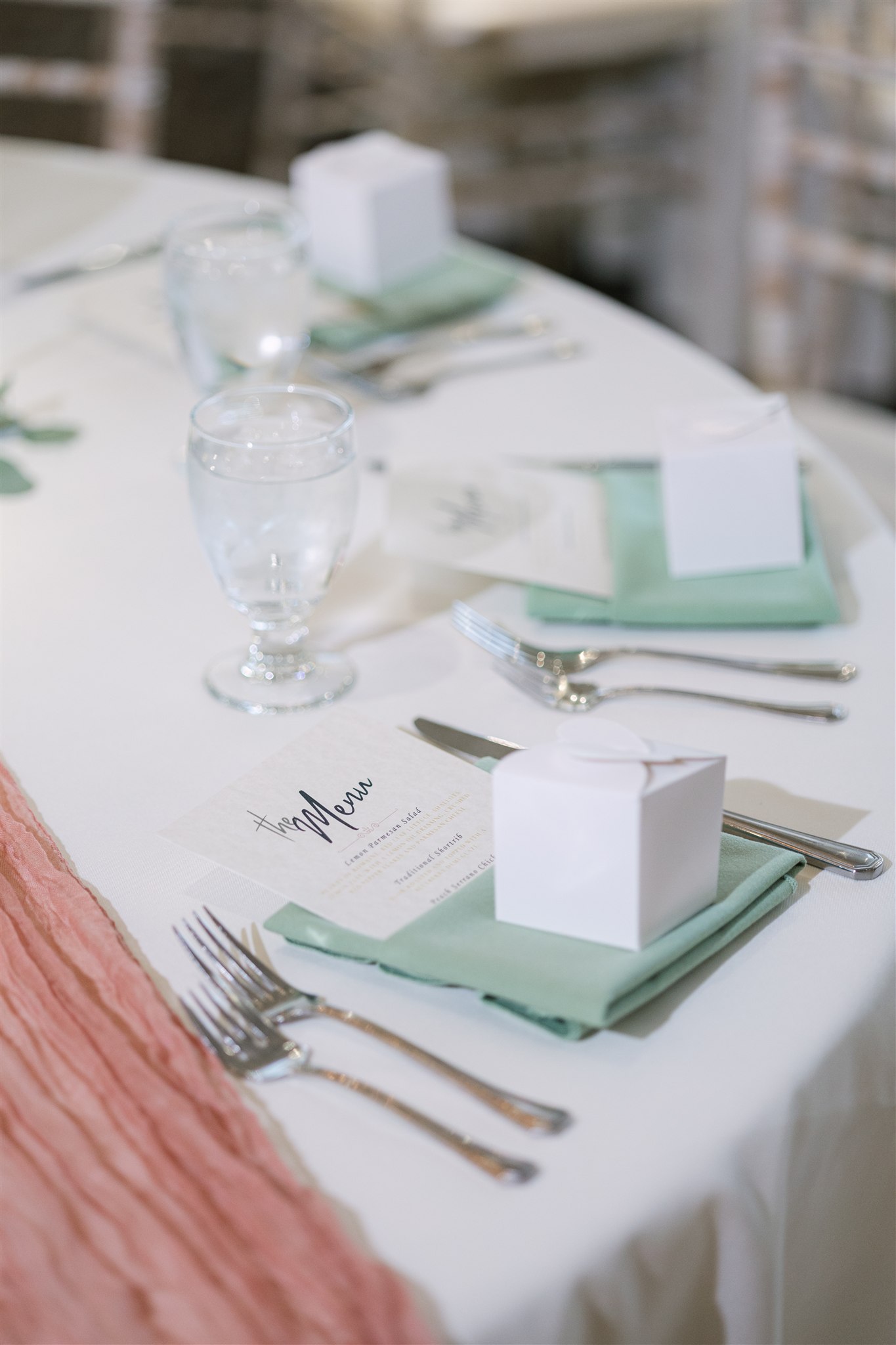
When guests talk about your wedding years from now, they probably won’t remember the exact shade of your napkins — but they will remember the food. In this post, Casey Green Weddings shares how to create a wedding menu that feels personal, elevated, and unforgettable by focusing on guest experience, meaningful flavors, thoughtful dietary accommodations, and a few standout “wow” moments your guests will rave about long after the last dance.
read the post


A Location-Based Wedding Budget Breakdown (Using AI)
If you’re newly engaged, there’s a good chance wedding budgeting feels… overwhelming.
You may have a total number in mind, but then the questions start spiraling:
- How much should we spend on catering?
- Is our venue eating up too much of the budget?
- Why does everything cost more than Google said it would?
- Are weddings in our city just more expensive?
Here’s the truth most couples don’t hear early enough:
Wedding budgets aren’t one-size-fits-all—and your location plays a huge role in where your money actually goes.
That’s why one of the smartest things you can do at the beginning of the planning process is create a location-based wedding budget breakdown that reflects real market pricing, not national averages.
And yes—AI can help with this in a very practical, grounded way.

Why Wedding Budget Percentages Matter
A healthy wedding budget isn’t just about the total dollar amount—it’s about how that money is allocated.
Most professionally planned weddings follow a percentage-based structure, meaning each category typically takes up a certain portion of the overall budget. When those percentages are off, couples often feel like they’re “overspending” without understanding why.
For example:
- Catering and bar costs are higher in destination and resort towns
- Venue and rental costs increase dramatically in high-demand regions
- Staffing, labor, and service fees vary widely by location
When couples don’t account for these regional differences, budgets fall apart fast.

The Problem With “Average Wedding Cost” Advice
You’ve probably seen articles that say things like:
“Spend 40–50% on catering”
“Photography should be 10–15%”
While those numbers can be helpful starting points, they’re dangerously misleading without context.
A wedding in:
- Sedona
- Napa
- New York City
- Southern California
…will look very different from one in a rural or low-cost area—even with the same guest count and overall budget.
What couples actually need is a breakdown that answers:
“What does this look like where we’re getting married?”

How AI Can Help You Build a Smarter Wedding Budget
When used correctly, AI can act like a digital wedding planning assistant—one that understands:
- Your total budget
- Your guest count
- Your wedding location
- Regional pricing expectations
Instead of guessing or pulling numbers from random blogs, you can ask AI to give you a custom percentage breakdown that reflects your reality.
That’s why we created the prompt below.
Free AI Prompt: Location-Based Wedding Budget Breakdown
Use this prompt inside ChatGPT or your preferred AI tool to get a realistic, location-specific breakdown of how your wedding budget should be allocated.
👉 Copy + Paste This Prompt:
You are an experienced wedding planner with deep knowledge of regional wedding costs across the United States.
I am a newly engaged couple planning a wedding with a total budget of $[INSERT TOTAL BUDGET].
Our wedding will take place in [CITY, STATE / REGION], and we are expecting approximately [GUEST COUNT] guests.
Please create a percentage-based breakdown of how much of our total wedding budget we can realistically expect to spend in each major wedding category, taking into account local market pricing and cost of living for our location.
Include the following categories (and add others if relevant):
- Venue & Rentals
- Catering & Bar
- Photography & Videography
- Wedding Planner / Coordinator
- Florals & Décor
- Attire & Accessories
- Entertainment (Band/DJ)
- Stationery & Paper Goods
- Beauty (Hair & Makeup)
- Officiant
- Cake & Desserts
- Transportation
- Rentals (tables, chairs, linens, specialty items)
- Favors & Welcome Gifts
- Miscellaneous / Buffer
For each category, provide:
- The recommended percentage of the total budget
- The estimated dollar range
- A short explanation of why this category costs what it does in our location
Finally, include:
- Categories couples typically underestimate in this region
- Areas where couples can save or reallocate funds without sacrificing guest experience
Present everything in a clear table, followed by a short summary of budgeting advice tailored to our location.

How to Use This Breakdown (and What to Do Next)
Once you receive your AI-generated breakdown:
- Compare it to your current spending priorities
- Identify categories that may need adjustment early
- Use it as a baseline when reaching out to vendors
- Build confidence knowing your budget aligns with local expectations
This step alone can prevent thousands of dollars in surprise expenses later.
Want More Help Turning This Into a Real Plan?
This AI prompt is an incredible starting point—but it’s just one piece of the puzzle.
If you want help:
- Turning this breakdown into a month-by-month plan
- Understanding vendor proposals and hidden fees
- Learning how to reallocate your budget strategically
- Feeling confident every step of the way
That’s exactly what we cover inside Master the Wedding—our step-by-step wedding planning course designed to help couples plan smarter, stress less, and stay on budget.
I hope this prompt will help you gather a realistic understanding of the anticipated wedding expenses for your wedding market.
Remember, don’t let the financial part of planning a wedding stress you out. If you start to feel you’ve bitten off more than you can chew, pause and regroup. The most important part of the wedding day is celebrating your connection with your best friend. Consider dialing back a few elements of your wedding to what matters most to you – emotionally. Cut the rest.
If you’re having trouble deciphering what you might be able to scale back. Ask yourself, “Will this be a detail I will want to remember 10 years from now?”. If the answer is “I’m not sure” or better yet, “Nope.”, then you know what to do.
Wedding planning is supposed to be fun ALWAYS. You’re in control. Design the wedding AND the wedding planning experience you want. 🙂
You got this.
With love,
Casey
Casey Green Weddings, LLC
2501 S. Village Drive, Cottonwood, AZ 86326
www.caseygreenweddings.com
read the post

Getting engaged is one of the most exciting moments of your life—and also one of the most overwhelming. Suddenly you’re making decisions about budgets, guest lists, venues, vendors, and timelines… all while everyone has an opinion. As a professional wedding planner, I’ve seen one thing make the biggest difference for couples: clarity early on. That’s […]
read the post

A Step-by-Step Guide for Couples

Your wedding vows are more than just words—they’re the promises that will carry your marriage forward. They’re a once-in-a-lifetime opportunity to share your heart, your humor, and your hopes in front of the people you love most.
But let’s be real—writing meaningful vows can feel daunting. Where do you even begin? How do you sum up your love story and your forever promises in just a few minutes?
This guide is here to help.
Below, you’ll find a simple, thoughtful process to help you craft vows that feel personal, genuine, and unforgettable.
Step 1: Start with a Reflection Session
Before you put pen to paper, take time to reflect. Ask yourself:
- What do I love most about my partner?
- When did I know they were “the one”?
- What challenges have we faced together—and how did we grow from them?
- What does marriage mean to me?
- What do I want to promise them for our life ahead?
Take notes. Don’t worry about sentence structure or flow yet—just let your heart speak.
Step 2: Get Inspired (But Stay Original)
It’s totally okay to read examples of vows online or draw inspiration from poetry, books, or movies—but make sure your final vows are yours. Avoid copying someone else’s words verbatim.
Pro tip: If you find a quote or phrase that captures your feelings perfectly, use it as a springboard and then expand with your own story.
Step 3: Decide on Tone and Length Together
Do you want your vows to be romantic? Poetic? A little funny? Heartfelt with a few inside jokes?
Make sure you and your partner are on the same page so your vows feel balanced during the ceremony. You don’t need to match word-for-word, but it helps if you agree on general tone and timing (most vows are around 1–2 minutes).
Step 4: Follow a Simple Structure
Here’s a framework that works beautifully:
- Start with a personal story or reflection.
Share a sweet memory, how you met, or what you first noticed about them. - Express what you love about them.
Be specific. Mention quirks, traits, or ways they make you feel. - Share what they’ve taught you.
How have they helped you grow? What have you learned about love? - Make your promises.
These are the heart of your vows. Mix the meaningful with the practical and personal:
- “I promise to support your dreams…”
- “I promise to always make you coffee on Sunday mornings…”
- “I promise to choose you, every single day.”
- “I promise to support your dreams…”
Close with a look ahead.
Paint a picture of the life you want to build together.
Step 5: Write from the Heart, Then Edit with Care
Once you’ve written your first draft, let it sit for a day or two. Then read it out loud. Does it sound like you? Does it flow naturally? Does it reflect the promises you want to make?
Edit for clarity, tone, and length—but don’t over-polish. A little vulnerability and imperfection makes your vows feel real.
Step 6: Practice, But Keep It Fresh
Read your vows aloud a few times so you feel comfortable, but don’t memorize them word-for-word. You want them to feel sincere and spoken to your partner—not like a rehearsed monologue.
Print or handwrite them on a card for the ceremony. (Bonus: These make beautiful keepsakes.)
Bonus Tips:
- Avoid inside jokes only the two of you understand. A little humor is great—just make sure guests can follow.
- Speak slowly and clearly. Your vows deserve to be heard and felt.
- Feel free to cry (or laugh). Emotion is part of the magic.
- Don’t be afraid to be you. Whether you’re poetic or practical, quiet or expressive—let your personality shine through.
Final Thoughts
Your vows aren’t about being perfect. They’re about being present. About showing up fully and honestly to say: I see you, I love you, and I choose you.
So take a deep breath, trust your heart, and speak your truth. Your partner—and everyone listening—will be deeply moved by your words.
Casey Green Weddings, LLC | 2501 S Village Drive, Cottonwood, AZ 86326
read the post

Your wedding day was a momentous occasion made even more special by the friends and family who joined in your celebration. As you start your journey as a married couple, expressing gratitude through heartfelt thank you notes is the perfect way to honor those who contributed to your big day. Here are some best practices […]
read the post


I know it’s cliche, but truly, your wedding is just the beginning of the next awesome phase of your life together!
Establishing traditions in your first year of marriage can help build a strong foundation and fill your life with joy and connection. Here are ten delightful traditions to consider starting as newlyweds.
1. Monthly Date Nights
Regularly scheduled date nights are crucial for maintaining your connection amidst the hustle and bustle of everyday life. Dedicate time each month to go out or enjoy a special evening at home, ensuring you prioritize your relationship and create shared memories.
2. Yearly Anniversary Letters
On each anniversary, write letters to each other reflecting on the past year. Share your gratitude, highlights, and hopes for the future. Keep these letters in a special box to revisit and cherish over the years.
3. Weekly Check-Ins
Set aside time each week to have a check-in conversation. Discuss any concerns, joys, and upcoming plans. This tradition encourages open communication and prevents misunderstandings or unresolved issues.
4. Cooking Together
Pick a day each week to cook a meal together. Whether trying a new recipe or preparing a favorite dish, cooking as a team can be fun and a relaxing way to bond.
5. Holiday Traditions
Create your unique holiday traditions. Whether it’s a special recipe, a movie marathon, or a yearly photo in matching pajamas, these rituals add a personal touch to the holidays.
6. Volunteer Together
Find a cause that you’re both passionate about and volunteer together. Giving back as a team fosters empathy and strengthens your partnership by working towards a common goal.
7. Building a Bucket List
Compile a list of experiences and goals you want to achieve together, from travel destinations to personal challenges. Revisit and update your list annually, marking off achievements and adding new aspirations.
8. Regular Photo Albums
Capture your favorite moments and create a yearly photo album. This tradition not only helps commemorate each year of your marriage but also gives you a beautiful collection of memories to look back on.
9. Explore a New Activity
Commit to trying a new activity or hobby together every year. Whether it’s a dance class, hiking, or learning a language, these shared experiences will bring you closer together and introduce you to new interests.
10. Seasonal Traditions
Identify activities unique to each season that you both enjoy, like apple picking in the fall or beach trips in the summer. These seasonal traditions create anticipation and rhythm in your yearly cycle.
These traditions are just the beginning of the wonderful experiences you will share as a married couple. They are meant to enhance your life together, bringing laughter, adventure, and a sense of belonging. As you integrate these traditions, remember to be flexible and adapt them to fit what feels best for your unique relationship. Here’s to a joyful and enduring marriage filled with love and cherished traditions!
Embrace these traditions with love and enthusiasm, ensuring they reflect your unique relationship and bring joy to your shared life. Should you need further inspiration or guidance, feel free to reach out!
Want more wedding planning tips and tricks sent directly to your inbox each week? Don’t forget to subscribe.
Casey Green Weddings, LLC | 2501 S Village Drive, Cottonwood, AZ 86326
read the post

Your wedding day should feel joyful, seamless, and stress-free — but behind every smooth celebration is careful coordination and countless moving pieces working together behind the scenes. This comprehensive Wedding Day Walk Through Checklist breaks down the essential tasks a day-of coordinator handles throughout the wedding day, from vendor arrivals and ceremony setup to reception timing, guest experience, emergency kits, and final venue walkthroughs. Whether you’re hiring a professional coordinator or asking a trusted friend or family member to help manage the day, this guide will help ensure nothing gets overlooked so you can stay present and fully enjoy every moment.
read the post


Creating a wedding seating chart may initially seem like a daunting task, but with a clear strategy, it can be a straightforward process. Here’s a step-by-step guide for newly engaged couples to organize and create their perfect wedding seating chart:
Step 1: Gather Your RSVPs
Ensure you have all the RSVPs collected before you start working on the seating chart. Knowing exactly who is coming will inform how many tables and chairs are required.
Step 2: Understand Your Venue Layout
Get a detailed floor plan from your venue, including locations for tables, dance floors, and exits. Knowing the layout is essential for effective planning and flow.
Important factors to consider include:
- Consider event flow: For example, put your welcome/guestbook/card table near the guest entrance so guest see it immediately when they arrive for the ceremony; Another tip, consider placing your bar toward the back of your cocktail and dinner reception spaces to encourage guests to enter the space, instead of placing the bar close to the entrance which could create a bottleneck.
- Table Sizes and Shapes: Note what tables you will be hosting for your reception. Round, rectangular, or square tables can each influence how conversations flow. No matter the shape – the key here is to note how many guests can comfortably fit at each table. This will come in handy soon when you start to group your guests.
- Dance Floor Placement: Ensure guests who love to dance are seated nearby. I also recommend putting the dance in the center of the reception area if possible. This allows guests who might not be able to be on the dance floor the entire night to remain seated and still feel a part of the party.
- Entrance and Exit Points & Restroom locations: Remember to account for accessibility for those who may need it.
Step 3: Categorize Your Guests
Break down your guest list into categories: family, friends, work colleagues, etc. It will make it easier to organize tables based on relationships and common interests.
Common categories might include:
- Family: Both yours and your partner’s.
- Friends: Old school buddies, college friends, co-workers.
- Acquaintances: Plus-ones, distant relatives.
Step 4: Use a Seating Chart Tool
Consider using software or an online tool to arrange seating. These tools allow you to move guests around easily and visualize the layout.
There are several digital tools available that can simplify the process:
- Online Seating Chart Makers: Websites like Aisle Planner, AllSeated or WeddingWire offer user-friendly interfaces for arranging tables and seating.
- Spreadsheets: If you prefer, create a digital spreadsheet to manually assign seats and visualize the layout.
Step 5: Start with Your VIP Tables
Begin seating key guests such as close family members and the wedding party. Typically, these are placed closest to the couple at the head table or special VIP tables.
Step 6: Group Friends and Common Guests Together
Place friends and guests with shared interests or relationships together. Aim to seat people with potential shared stories or backgrounds. Remember to try to keep it to groups of 8-10 guests per table (or the appropriate number for your specific table sizes).
Don’t forget to Consider Social Dynamics
While grouping guests, think about the dynamics between them. For instance:
- Common Interests: Seating people with similar hobbies or backgrounds can ignite lively conversations.
- Avoiding Conflict: Ensure any guests with a known history of conflict are seated separately to maintain peace.
- Varying Personalities: Balance outgoing and quieter personalities to keep the energy just right.
Remember Individual Needs
Keep in mind any guests with special needs, such as older guests or those with accessibility requirements, ensuring they have comfortable seating arrangements.
Step 7: Finalize and Review
Once your chart is populated, review it multiple times for balance and inclusivity. Ensure each table has a mix of personalities that can lead to enjoyable conversations.
Step 8: Communicate the Seating Plan Clearly
Once finalized, ensure your seating chart is clearly communicated to your guests on the wedding day through a board or escort cards. Consider printing individual place cards at each table as well. (If you are hosting a plated meal, this is MUST HAVE detail for your wedding. Don’t forget to add place cards to your wedding signage list.)
Final Thoughts
Keeping these steps in mind during your seating arrangement process will help streamline the experience and ensure a comfortable and enjoyable environment for your guests. Remember, flexibility is key, so be prepared to make adjustments as needed. If you have any further questions or need more personalized advice, feel free to ask.
All my best,
Casey
If you’d like more FREE wedding planning tips and resources, don’t forget to subscribe!
Casey Green Weddings, LLC | 2501 S Village Drive, Cottonwood, AZ 86326
read the post

Planning for the last two months leading up to your wedding is crucial to ensuring everything runs smoothly on your special day. Here’s a comprehensive checklist of logistical details that newly engaged couples need to confirm and coordinate: Complete This First Before I dive into your checklist, I am assuming you have completed the following […]
read the post


hey there!
Meet Casey
Want access to all the knowledge of a full service wedding planner - but not sure that investment is in your wedding budget? You're in the right place!
Casey's mission is to empower you with wedding planning tips and strategies to plan the wedding of your dreams - even if you're on a tight budget :)
LEARN MORE

Wedding Expenses got you Down?
Check out these
5 Strategies to Stretch Your Budget
Planning your wedding can be fun until all the expenses start to add up. Follow these tips to help you make smart choices to make your budget go further!
LEARN MORE

FREE Wedding Planning Resources
Get on the List
Join the email list for trusted planning advice, wellness tips, wedding inspiration, curated recommendations, and exclusive resources delivered weekly.
Join us!


