


First I have to address this question:
Do I really need a videographer?
The answer is of course – no. However, I have never had a couple regret hiring one in all my years of planning.
While I am a HUGE fan of splurging on your wedding photographer, and truly value wedding photography, I feel like wedding videography just takes the entire experience up one more level.
Video provides additional depth to the day that photography cannot. Video allows your guests to come to life with movement and sound. Sometimes just having a recording of your guests voices will be very sentimental to you down the road. Imagine how it will feel to be able to hear your Dad’s voice during his dinner toast when he is no longer with you?
A few years ago, I stumbled up a short video clip of my mother at my uncle’s (her other brother’s) wedding in 1965. My mom would have been about 18 at the time. There was no sound. It was just an image of my Mom dancing and laughing. While that seems basic, just that short clip made me completely reimagine my mother. In the video her hair was a beautiful blonde (I had only known her to have light brown hair), her light hearted movement was so fun to see – as I usually understood to be a professional, poised, more reserved version of this playful young girl. Just this short clip allowed me to see my Mom as a beautiful teenager that pictures just couldn’t portray.
I share this story just to impress upon you the power of video. While I know it isn’t in the budget for everyone. It is definitely worth the investment.
So now that I have convinced you to hire a videographer, let’s talk about how to do it!
Here’s a step-by-step guide to finding and hiring the perfect wedding videographer:
1. Identify Your Style
Before searching for a videographer, determine the style you envision for your wedding video. Here are the 4 main styles to consider:
- Cinematic: A film-like quality featuring storytelling, with dramatic shots and creative editing.
- Documentary: A straightforward, chronological account of your day, capturing genuine interactions and events.
- Highlight Reel: A short, high-energy video summarizing key moments, often set to music.
- Storytelling: A blend of cinematic and documentary styles, focusing on narrating your unique love story.
Understanding your preferred style will help narrow down your videographer choices.
2. Set Your Budget
Establish a budget for videography services. Videography can vary widely in price, influenced by factors such as duration of coverage, number of videographers, editing complexity, and package details.
If hiring a videographer is a definite stretch for your budget, consider looking at videographer packages that don’t have all the bells and whistles. Usually just a highlight reel with your audio will capture all the highlights you will need. Obviously if budget allows, the additional options can be fun to explore. My favorite splurges are guest interviews and drone footage.
3. Do Your Research
Gather recommendations from friends, family, and wedding planners. Explore wedding forums, videography websites, and social media platforms like Instagram or Vimeo to discover videographers whose work resonates with you. Make a list of potential candidates.
4. Review Portfolios
Carefully review each videographer’s portfolio or demo reels.
Pay attention to:
- Style and Quality: Consistency with your vision and high production quality.
- Storytelling Ability: How well they capture emotions and weave them into a narrative.
- Versatility: Their capability to adapt to different settings and lighting conditions.
- Final Edit: Do you like how their final product looks?
5. Conduct Interviews
Arrange interviews with your top choices to discuss:
- Availability: Confirm they are available on your wedding date.
- Packages and Pricing: Understand what’s included in their packages, from coverage hours to post-production services.
- Experience: Inquire about their experience with weddings similar to yours in size and style.
Here is a short list of essential questions to ask to ensure they are the right fit for you:
- What is your videography style? – Do you have a preference for cinematic, documentary, storytelling, or a mix of styles?
- Can we view a full film or highlight reel from a recent wedding? – Are the couples and venues similar to ours in style or size?
- Are you available on our wedding date? – Do you have any other commitments on that day that might affect availability?
- What packages do you offer, and what do they include? – How many hours of coverage are included, and how many videographers will be present?
- How do you handle audio? – What kind of microphones or equipment do you use to ensure clear sound for vows, speeches, and toasts?
- How do you coordinate with photographers? – Have you worked alongside photographers during weddings, and how do you ensure seamless collaboration?
- What is your policy on travel and accommodations for destination weddings? – Are there additional fees for travel, lodging, or food?
- Can you accommodate special requests or specific shots we want? – How do you incorporate a couple’s unique style or needs into the shoot?
- When will we receive our edited video, and in what formats will it be delivered? – Do you provide a digital download, USB drive, DVD, or online streaming option?
- What is your payment policy and cancellation policy? – How much is the deposit, and what are the schedules for installment and final payments?
- Do you have insurance? – Can you provide proof of liability insurance covering your equipment and services?
- Can you provide references from past clients? – Would you be comfortable if we reached out to them for feedback about their experience?
- How do you handle unforeseen circumstances? – What steps do you take if equipment fails or if you have a personal emergency?
- Do you offer raw footage? – Is there an additional cost associated with this, and how do you typically handle requests for raw footage?
- Do you include any engagement or pre-wedding films? – Is there an option to include additional videos such as a love story or engagement shoot?
By asking these questions, you’ll gain a clearer understanding of each videographer’s capabilities, style, and professionalism, helping you make an informed decision for your wedding day.
6. Evaluate Compatibility
Ensure that you connect well with your videographer on a personal level. They will be closely interacting with you on your wedding day, so feeling comfortable and being able to communicate openly is crucial for a successful collaboration.
7. Check References & Reviews
Ask for references from previous clients and take time to contact them. Discuss their overall satisfaction with the videographer, their professionalism, and the final product quality.
8. Review the Contract
Before finalizing your decision, review the contract thoroughly. Key points to ensure are clear include:
- Services Provided: Details of coverage, editing, and deliverables such as full-length films or highlights.
- Payment Terms: Deposit requirements, payment schedule, and total cost.
- Cancellation and Change Policies: Understand the terms regarding cancellations or changes to avoid surprises.
Final Thoughts
Hiring a wedding videographer is a fantastic way to preserve the sights and sounds of your special day. By following these steps, you can make an informed choice, ensuring that your wedding video will be a cherished keepsake for years to come. Best of luck in your planning journey!
I hope this helps you find a videographer who beautifully captures your wedding day and all its precious moments!
If you would like more wedding planning tips and tricks, be sure to subscribe to receive weekly updates!

Casey Green Weddings, LLC | 2501 S Village Drive, Cottonwood, AZ 86326
read the post

After selecting the venue, choosing your wedding photographer is the second most important vendor decision you will make. Your wedding day is going to be an incredible, yet overwhelming experience. Emotions are going to be running high. A million wonderful interactions are going to take place between your friends and family. It will feel like a […]
read the post


One of the highlights of any wedding is the food, but creating a delicious, memorable menu doesn’t have to break the bank. With careful planning and creativity, you can offer a delightful culinary experience that fits comfortably within your budget.
Here’s how to design the perfect wedding menu without overspending:
1. Establish Your Budget
Start by determining the overall amount you’re willing to allocate to food and beverages. Keep in mind, the food and beverage element of your budget can be between 40-60% of your total wedding budget. Don’t let high numbers scare you in this phase – unfortunately, this is normal. Knowing your budget from the outset will help guide your decisions and ensure you make choices that align with your financial plan.
If you need more assistance estimating how much of your overall wedding budget to allocate to each category, check out this resource here.
2. Choose the Right Catering Style for You
Consider the following service styles to see which best suits your budget and vision:
Buffet
Offers a range of options and can be more economical than plated dinners due to the lower labor requirements. It also allows guests to choose what they like best.
Plated
The traditional plated meal is often considered to be the most expensive option, however this is not always the case. Consider offering a less expensive protein as the featured entree, like a chicken or a creative vegetarian option. Making these menu decisions can keep the costs of this service style similar to the other options.
Food Stations
Provides variety and flexibility, encouraging guests to mingle while tasting different dishes. It also puts a new twist on the traditional buffet style approach.
Cocktail Reception
Focuses on hors d’oeuvres and small bites, potentially saving costs on a sit-down meal.
Word of caution: Heavy hors d’ouevres receptions can add up quickly and become just as expensive (a more) than traditional dinner receptions. If you go this route in an effort to stretch your budget, consider offering a grazing station (charcuterie boards are popular) and only 2-3 passed appetizers.
Be sure to request quotes for different services styles from your potential caterers so you can see how the pricing varies between the options.
3. Prioritize Your Menu Items
Identify which aspects of the meal are most important to you, whether it’s a gourmet entrée, a signature cocktail, or a show-stopping dessert. Allocate a bigger portion of your budget to these priorities, while simplifying less critical components.
4. Opt for Less Expensive Proteins & Seasonal/Local Ingredients
Oftentimes the bottom line of a caterer proposal can be adjusted by choosing less expensive proteins for your main entrees. Explore proteins such as chicken and pork. Move away from filet, short rib, chilean sea bass.
Also, choose seasonal and locally sourced ingredients to enhance freshness and reduce costs. Local ingredients are often less expensive because they cut down on transport fees and support local producers, adding a personal touch to your menu.
5. Limit Menu Choices
Offering fewer options can simplify your menu and reduce costs. Provide one or two options for each course or stick to a single entrée for everyone, which allows caterers to buy in bulk and reduce prep complexity.
6. Skip the Extras
Forgo extras like specialty breads, costly seafood, or extravagant side dishes. Instead, focus on providing well-executed, flavorful main dishes and complements that leave a lasting impression without unnecessary expense.
7. Let Them NOT Eat Cake
More and more I am finding couples do not want a big cake at their wedding. Instead more couples are opting for a small (1-2 tier) “cake to cut” – for the “cake cutting” tradition. Then they accompany the small cake with a beautiful spread of mini dessert choices for their guests. Popular ideas include cupcakes, cookies, macaroons, dessert shots, cheesecake bites, brownies, donuts, candies, etc. Let your imagination run wild with this!
8. Negotiate With Your Caterer
Don’t hesitate to discuss your budget constraints with your caterer. They can often suggest menu adjustments that maintain quality while reducing costs or offer package deals. Remember, they want to earn your business. If a proposal comes in a little too high, be sure to give the caterer a chance to rework the proposal with you to try to lower costs.
9. Consider Beverage Options
Provide a limited selection of alcohol, like beer, wine, or a signature cocktail, instead of a full open bar. This controls alcohol expenses while still offering guests enjoyable drink choices.
10. Plan for Leftovers
While it is not always possible to take home the extra food from your wedding reception. It is not a bad idea to discuss with your caterer how leftovers will be handled. You might plan to donate leftovers to a local food bank or package them for guests to take home, minimizing waste and maximizing the value of your spending.
Final Thoughts
Designing a wedding menu on a budget is all about prioritizing and planning creatively. By focusing on key components, utilizing local and seasonal ingredients, and choosing the right catering style, you can craft a menu that’s both delightful and budget-friendly. Happy planning, and bon appétit at your wedding feast!
I hope this guide helps you in creating a wonderful wedding menu that your guests will love! If you want more free planning tips and resources, subscribe to our Weekly Wedding Tips!
Casey Green Weddings, LLC | 2501 S Village Drive, Cottonwood, AZ 86326
read the post

If you’ve chosen a venue that requires you to hire an independent caterer, the caterer you choose will be the second most important vendor you hire. This vendor is critical because food and beverage costs are generally one of your largest wedding expenses. Here are a few tips to keep in the back of your […]
read the post


First, please know, reserving a hotel room block for your guests is not a requirement. Your guests are (hopefully) very capable human beings who can figure out their own hotel accommodations for the wedding.
However, a hotel room can be a nice gesture and can encourage wedding guests to stay in the same place which can create a fun community feeling during your wedding weekend.
Also, sometimes room blocks are necessary if you happen to be getting married in a location where lodging accommodations are scarce OR you’re getting married during a busy travel/event season for your wedding location. (For example: You’re getting married on Super Bowl weekend in the town where the Super Bowl is being hosted.)
Therefore, if you do decide to book a hotel room block or two for your wedding, here are a few items to consider.
Guaranteed vs. Courtesy
First, let’s start with a little room block education.
There are two types of room blocks – guaranteed and courtesy room blocks.
Guaranteed (or closed) room blocks come with an attrition clause attached to them. This means if you reserve 30 rooms for a specific date, and your hotel guests only reserve 15 of those rooms for that date, you could be financially responsible for the remaining 15 rooms.
As you can imagine, if this occurs, it can be financially painful for you (or whoever guaranteed) the hotel rooms. So definitely be aware of what the attrition clause is if you agree to a guaranteed room block. Even though this sounds like a scary option, it may be the only way to go to ensure you and your wedding guests have specific hotel accommodations if your hotel is in high demand over your wedding day weekend.
Courtesy (or open) room block does not have an attrition clause attached to it. Which means you are not financially on the hook if the rooms in your room block are not reserved. However, these room blocks often require guests to book their rooms at least 30 days in advance as the rooms are generally automatically released a month before the first check in date on the room block.
Generally speaking, unless you have a specific reason for needing to agree to a guaranteed room block, the courtesy room block option is the much safer option to choose.
How to Calculate Your Room Nights Correctly
Now, let’s review how to calculate “room nights”. (This may sound simple but can be confusing.)
Room blocks are calculated in what are called “room nights”. Room nights are the number of total rooms you are reserving for your room block. This is simple to calculate if you are only reserving a room block for one night. However, if you are reserving rooms in your room blocks over multiple dates, be sure you calculate the rooms nights correctly, to make sure you are reserving the appropriate amount of rooms for your guests.
Here is an example below is an example of how a courtesy room block room night numbers would be calculated. (Say that 10 times fast!)
I hope this example helps calculate your room night numbers correctly:
Smith & Brown Courtesy Room Block
- Room block start date: Thursday, June 8
- Room block end date: Monday June 12
- 20 room nights per day
4 nights x 20 rooms per night = 80 room nights
Total Number of Room Nights = 80 room nights
Okay, now that we have some basic room block knowledge under your belt, let’s dive into the step by step process to book your room block for your wedding.
1. Estimate the Number of Rooms You Think You Will Need
Now that you know how to calculate your room nights, let’s estimate how many room nights you might need. If you are committing a closed room block (with an attrition clause), I always suggest you err on the side of caution and book less rooms than more. If your block fills up quickly, you can often ask your hotel to extend your block as needed. (I prefer you to fill your room block then having you on the hook to pay attrition fees for unfilled rooms.)
2. Research Potential Hotels
Identify several hotels near your wedding venue that you would feel comfortable referring your guests to stay in for your wedding. Consider factors such as proximity, transportation options, and amenities offered. Also, be sure to choose a range of hotel types and price points so you can easily accommodate different guest budgets and preferences. For example, consider reserving a courtesy room block at the hotel where you are getting married and the Hampton Inn down the street.
3. Compare Rates & Amenities
Contact several hotels to request room block pricing (closed vs. complimentary), amenities, and any special offers for wedding blocks. Also, be sure to ask about complimentary services, such as breakfast, parking, or shuttle service to your wedding venue, which can add significant value for your guests.
4. Evaluate Contract Terms
This step is critical – especially if you are considering booking a closed room block with an attrition penalty. Be sure you understand the terms and conditions associated with these contract elements:
- Cut-Off Date: The deadline by which guests must book their rooms. What happens after the cutoff date? Are the rooms automatically released? What happens if guests want to book after this date? Is it possible based on occupancy availability at the hotel?
- Attrition Rate: The percentage of rooms you can release without penalty if not all are booked. What is the financial penalty if you are not able to fill your room block?
Cancellation Policies: Rules surrounding room cancellation and any potential charges.
5. Negotiate Where Possible
Don’t hesitate to negotiate terms with the hotel sales manager. They may offer better rates or additional perks, such as a complimentary room for the couple or a discounted suite, especially if you’re booking during off-peak times.
6. Reserve the Block
Once you’ve compared and negotiated, reserve your room block with the hotel that offers the best balance of cost, amenities, and flexibility. Confirm all details in writing to avoid any misunderstandings later.
7. Communicate Details to Your Guests
Include hotel information on your wedding website. Provide guests with the hotel’s contact information, booking link, and any codes needed to access the special rates. Encourage guests to book early (at least 3 months before your wedding), especially if your wedding dates align with busy travel seasons.
8. Monitor & Adjust
Maintain communication with the hotel’s booking manager to monitor reservations. Request a rooming list report often (one every other week or so) from your hotel contact. If the block is filling up quickly, consider adding more rooms. Conversely, if bookings are slow, be sure to reach out to your friend and family to encourage them to make their hotel reservations sooner than later.
Final Thoughts
While room blocks are not a necessity, they can make finding accommodations for your guests much easier with a small discount. Just remember, if you are choosing to reserve a guaranteed room block, be sure you understand the financial obligation associated with the room block agreement. Happy room block reserving!
Did you find this post helpful? If so, please subscribe to receive weekly wedding planning tips.
Casey Green Weddings, LLC | 2501 S Village Drive, Cottonwood, AZ 86326
read the post

Way to go! You’ve chosen your venue and your wedding date! You are now ready to send your save the dates to your guests – or are you?!! (Just kidding – I will make sure you are!) Here’s a comprehensive guide to help you navigate the process of sending out save the dates: 1. Finalize […]
read the post

An increasingly popular trend is creating a wedding website for your wedding. I would wager to say today, (and especially for destination weddings) a wedding website is not optional. You must have an online space to (at least) communicate wedding details to your guests.
Now if you’re not super familiar with creating websites, don’t freak out. Creating a wedding website isn’t as hard as it might sound. Also, take heart in knowing you can make your wedding website be as simple or complex as you would like.
Follow this process to make creating your wedding website a breeze. 🙂
Choose a Wedding Website Template
Do yourself a favor and don’t try to build anything from scratch. There are a bunch of fantastic wedding website companies that offer great templates to help you get started.
Here is a list of a few wedding website companies that offer this service for free (or a small fee for some of their upgrades services – link RSVP tracking).
- The Knot
- Zola
- Bliss & Bone
- With Joy
What to Information to Include on Your Website
Great! Now that you’ve chosen your wedding website template, let’s start to build it out!
I suggest you make your wedding website be a main vehicle to communicate the details of your wedding to your wedding guests. Here’s a comprehensive list of details to include on your wedding website to make sure your guests are well informed and prepared for your wedding.
Basic Event Details: Date, Time & Location
I know this may seem obvious, but be sure to be clear about the date, time and location of your wedding ceremony and reception. It is also a good idea to include directions and even a map image of the area to be crystal clear with your guests regarding when and where the event is taking place.
Schedule of Events
Providing an overall timeline for your specific wedding day is a great way to keep everyone on the same page throughout the wedding weekend.
Here is a list of small events you might consider including on your wedding weekend timeline:
- Ceremony rehearsal
- Rehearsal dinner
- Ceremony
- Cocktail reception
- Dinner reception
- After party
- Brunch
Additional events to consider:
- Welcome events
- Golf outings
- Spa days
- Group hikes
- Pool time (Rented cabana)
RSVP Details
I strongly encourage you to collect your RSVPs online via your website. Consider creating a comprehensive online RSVP questionnaire for your guests which asks the basic questions like wedding attendance and entree selection, AS WELL AS, if they plan to attend the rehearsal, welcome reception, brunch, in what hotel they are staying (if they are traveling from out of town), etc.
Many wedding website templates have fantastic reporting features which make organizing all your guest responses to your RSVP questionnaire a walk in the park. While you will still have to remind many of your guests to RSVP for your wedding, collecting your responses via your website will make your life so much easier overall.
Registry Information
Share where you’re registered for gifts. Direct links to your registries make it easy for guests to access them. Also consider choosing to do non-traditional registry options like honeymoon funds, experience vouchers or simple monetary donations.
If you really don’t want gifts, consider suggesting charitable contributions to your favorite charity instead of traditional gifts.
Accommodation Information
If you have reserved a couple of hotel room blocks for the out-of-town guests for your wedding, your website is a perfect place to provide this information to your guests. Be sure to include room rates and reservation links and instructions (if you have them) to make reserving rooms within your room blocks simple and easy.
If you don’t have a formal room block for your wedding, it still is a good idea to list a few reputable hotels, at a variety of price points, near your ceremony and reception site. This will help your guests, who may not be familiar with the area, make good informed decisions when determining their hotel accommodations for the event.
Transportation
Often there may be certain instructions you need to share with your guests regarding transportation to your wedding. This is often an overlooked detail for your guests. However, it can cause a lot of confusion and lead to frustration for your guests on your wedding day. The more information you can provide in this area, the less headaches you will have on your wedding day. Items to consider including in the transportation sections (if applicable) are:
- Parking guidelines & fees: Is there a specific location where guests can or cannot park? Is there a parking fee at the venue site?
- Shuttle: Will you be providing shuttle service for the guests? If so, when and where should guests meet to take part in this service?
- Valet: Is valet offered or required at your venue. If it is offered/required is there a fee associated with the service?
- Uber/Lyft: Do you recommend (or do NOT recommend) your guest consider ride share options to travel to your wedding? Also, if ride share is an option, consider offering a group discount code for guests to use at the end of the evening to help everyone get home safely (and deter drinking and driving).
Dress Code
This section does not need to be lengthy. However, a general description of the level of casual versus formal attire you are anticipating for the wedding will be helpful to your guests. Describing the dress code ensures guests arrive appropriately dressed and feel comfortable.
Also, if you are planning on any portion of your wedding being outside, and you know the weather will most likely be hot or cold, you may consider communicating this to your guests as well so they can plan accordingly.
Additionally any insider tips that may help your guests be more comfortable during your wedding should be included here. For example, if you’re getting married on grass, you might suggest flats or wedges for the ladies so their heels don’t get stuck in the muddy sod.
FAQ Section
This section can be gold for you if you have inquisitive guests! 😉 Take a minute to list all the questions your guests are already asking about your wedding and try to anticipate what future questions might be. Include it ALL on your FAQ page. Then when guests start asking questions, instead of having to answer each one individually, you can simply direct them to this page! 😉
Here are a few common questions to include:
- Are children invited?
- Where do you suggest I stay for your wedding? Is there a room block?
- Is parking available at the venues?
- What happens in the case of inclement weather?
Contact Information
Sometimes it is a good idea to provide a way for guests to contact you with additional questions. This could be an email address, phone number, or a contact form on the website. (This is of course optional)
Wedding Party Introduction
Your website is also a great place to honor your wedding party. You might want to share a small photo and a little bit about each member, explain your relationship and why they are so important to you.
Photo Gallery
If you are lucky enough to have a bunch of awesome photos from your courtship together, you might consider including your favorites in a gallery on your website. Guests love to see the “behind the scenes/personal” photos from your lives together. It helps everyone feel more connected to you as a couple and helps them get excited for the wedding!
Your Love Story
Finally, in the same vein as the photo gallery, for some of your guests and relatives who don’t live near you, they may be interested in knowing your love story. Consider sharing how you met your fiancé and some of the fun experiences you have shared together that have led you to decide to spend the rest of your lives together. This personal touch helps guests feel more connected to your celebration.
Let’s start designing your site!
I hope this gives you a good idea of what to include on your wedding website. Remember there are no rules! It is completely up to you! You can add all or only a few of these details to your wedding website.
Just remember, try to make your wedding website work for you in answering the many questions all your guests will ask leading up to your wedding. All the work you put into designing your website will pay off. Promise. You got this!
All my best,
Casey
Did you find this post helpful? If so, please subscribe to receive weekly wedding planning tips to help you create the wedding of your dreams!
Casey Green Weddings, LLC | 2501 S Village Drive, Cottonwood, AZ 86326
read the post

Congratulations on your engagement! As you embark on the exciting journey of wedding planning, one aspect that can significantly enhance the guest experience is the bar. A well-planned bar adds fun and flair to your celebration, creating an inviting space for your guests to relax and enjoy. Here’s a guide to help you design the […]
read the post
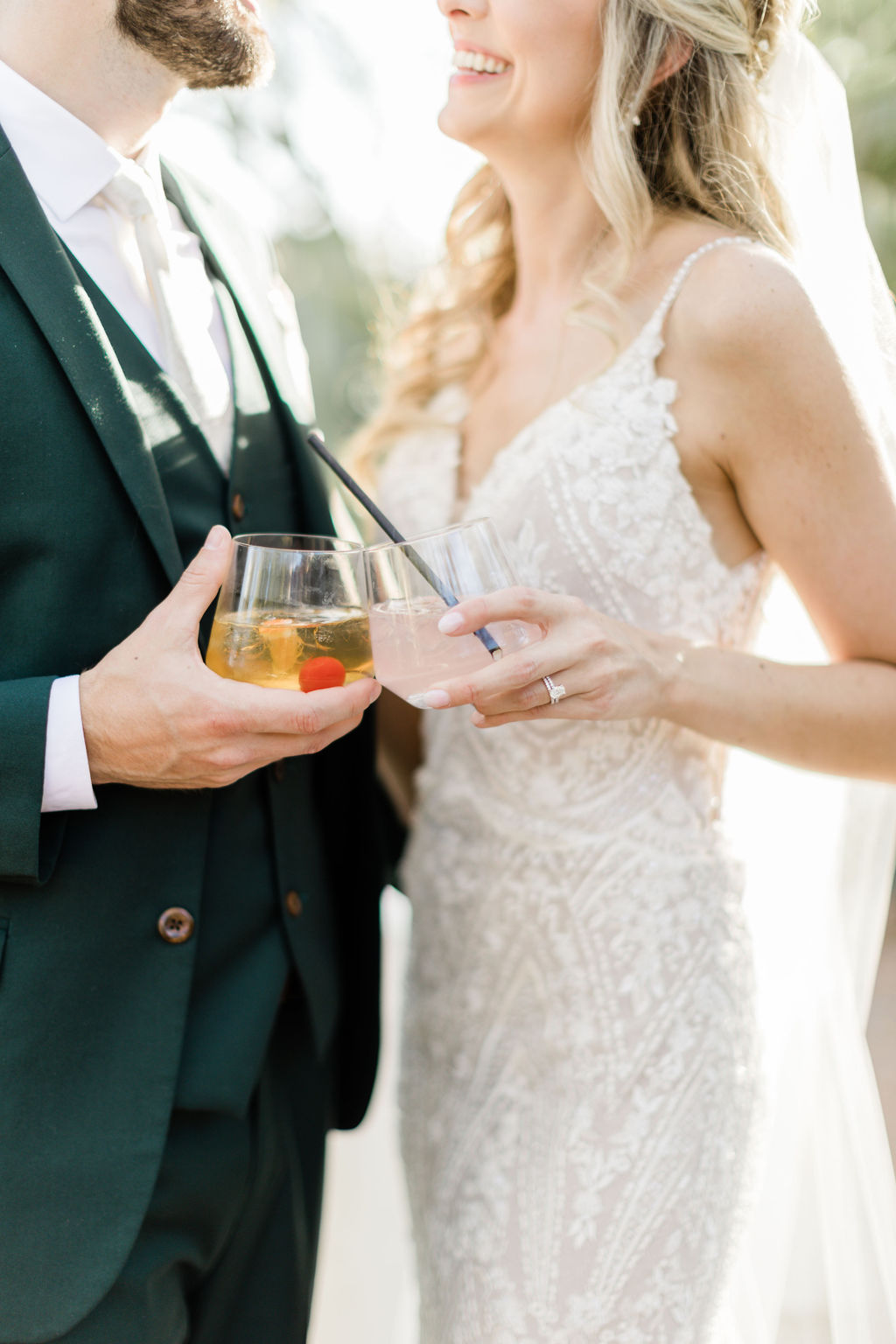
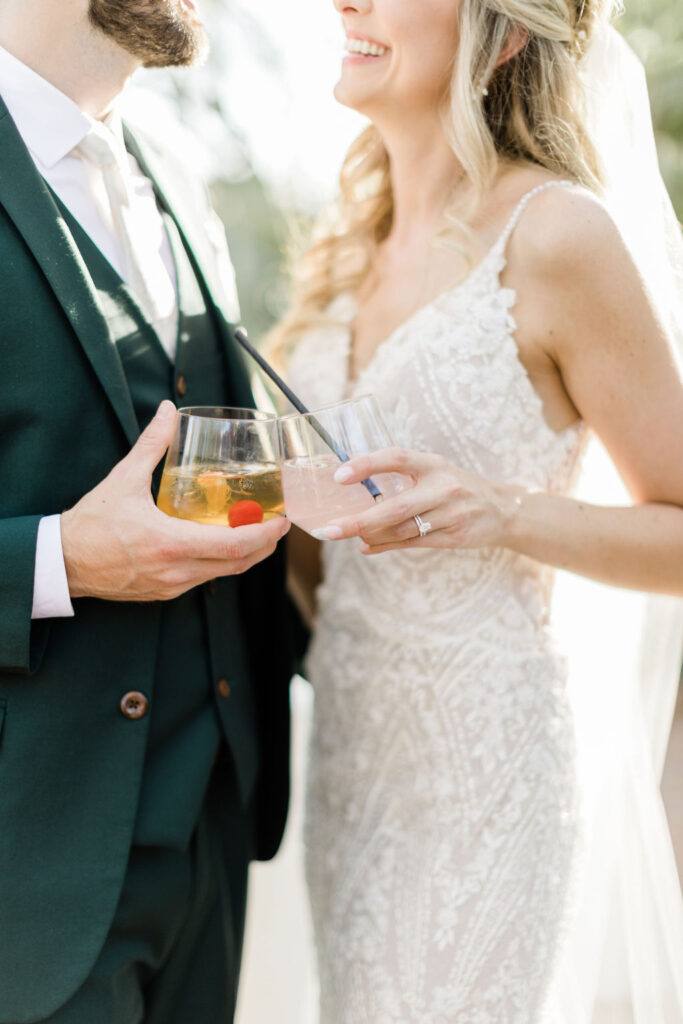
Bottoms up!
If you are fortunate enough to have fallen in love with a wedding venue that allows you to bring your own alcohol in for the wedding you might be wondering – how do I decide how much alcohol to purchase?
Follow the Formula
Here is the formula I use when estimating how much alcohol to purchase to build a modified full bar for your wedding:
- 1 drink per person, per hour
- Industry standard percentages are: 50% drink wine, 20% drink beer & 30% drink a mixed cocktail
Therefore, if you are anticipating 120 guests at your wedding and the bar is open for 5 hours the formula would look like this:
- 1 drink per person (120) x per hour (5) = 600 servings
600 servings equates approximately to:
- 75 bottles of wine (red/white/bubbles) (4 glasses of wine per bottle = 300 glasses/servings)
- 120 bottles of beer (1 serving per bottle = 120 servings)
- 4-5 (1.75 liter/handle) bottles of liquor (40 drinks per bottle (estimating 1.5 ounce of liquor per drink) = 200 servings)
What Should I Purchase?
Now that you have an estimate of how much alcohol to purchase, how do you decide what to offer at your bar?
My two cents is always remember you do not have to supply a full bar with every type of liquor, beer and wine – like your favorite restaurant. Your wedding should be a sampling of your favorites!
Here are a few quick tips regarding what specifically to buy:
Your Basic Booze
I recommend offering at least 3 liquors. Whiskey, gin, and vodka are the most popular and work well with many popular mixed cocktail drinks.
Upgraded Booze
If you’re going to splurge and offer more liquor choices than just 3, rum and tequila are the next two favorites.
We plan a lot of weddings in Arizona and tequila is almost always a MUST at all our bars for our famous prickly pear margaritas.
My take away is, think through your wedding and decide what signature cocktails or favorite drinks your wedding guests usually drink. Be sure to cater to these preferences. This is always a nice way to personalize your wedding and show your friends and family how well you know (and love) them (and their favorite cocktails).
Mixers
Mixers are key. Juice (usually orange or cranberry), soda (at least a cola), tonic water, and club soda are the basic must haves. Feel free to add your favorite ginger beer, sodas or other juices to customize your bar and compliment any signature cocktails you may be offering.
Garnishes
Lemons, limes and maraschino cherries are the basic staples. However, it might be fun to dream a little outside the box in this category. Upgrading your garnishes to fancy Luxardo cherries for your old fashioneds or maybe a dried/dehydrated blood orange slice, might be all you need to take your bar (and its cocktail offerings) to the next level.
Beer
It’s nice to select at least two types of beer (one dark or strong, one light) to provide your guests options. However, if your guests are beer drinkers, offering 4 four varietals might be the better way to go. If you fall into this category I recommend:
- 1 Domestic (Bud Light, Coors Light, Miller Light, Michelob Ultra, etc.)
- 1 Import (Corona, Heineken, Stella Atois, etc.)
- 1 IPA (Your favorite here)
- 1 Microbrew/Local (It is sometimes fun to choose a favorite beer from a local brewery. Maybe choose a beer varietal that is different from the 3 offered above.)
Wine
You’ll need at least one red wine and one white, but you don’t need more than one varietal (or blend) of each, unless you want to have them. If you’re just offering two varieties, and are not sure what to choose, Pinot Noir and Pinot Grigio are usually really safe choices.
Bubbles (Optional)
Cava from Spain, Prosecco from Italy, and sparkling wine from other non-Champagne regions are delicious, and they are almost always a better deal than true French Champagne.
If you’re going to serve bubbles as a toasting-only option, you want to plan for about 4–5 ounces per person, per toast (6 toast pours per bottle).
Keep in mind, you don’t have to do a bubbly toast, if you don’t want to. People can “cheers” with anything.
Final Thoughts About Estimating Your Quantities
Of course, understand, this is just the estimate I use. You know your guests best. If they are not heavy drinkers you might want to dial back these estimates a little bit (and vice versa – ha!).
Pro Tip: If possible, purchase your alcohol from a place that will allow you to return unopened liquor/beer/wine. It is always hard to estimate what your wedding guests will consume. It might be nice to be able to get a little money back after the wedding if you happened to have overestimated your guests drinking ability. 🙂
Cheers to a great wedding!
Casey
Want more free wedding planning tips and resources?
Casey Green Weddings, LLC | 2501 S Village Drive, Cottonwood, AZ 86326
read the post
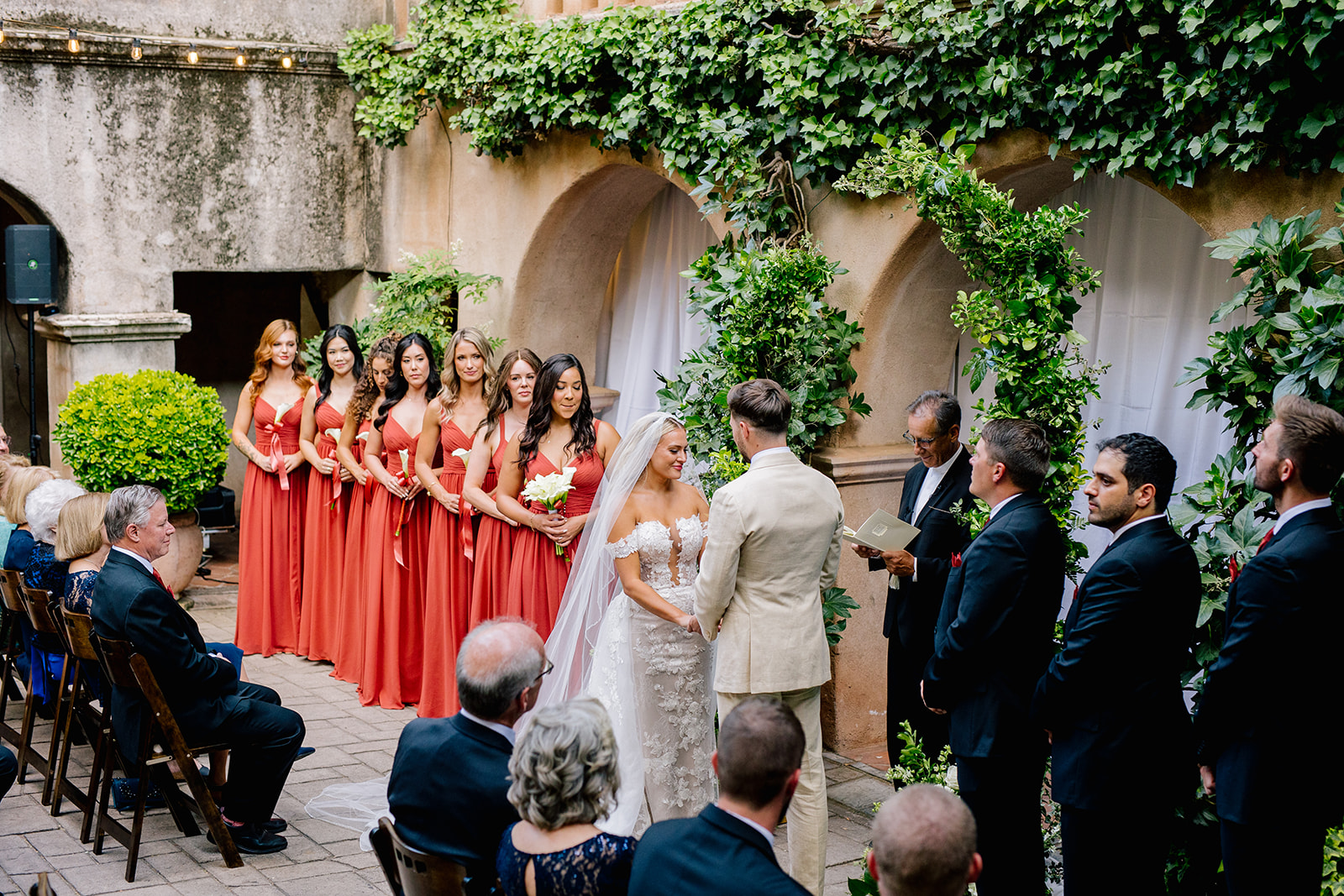
My goodness! Weddings are expensive! Can I get an AMEN?! If you’re like most people, you more than likely had no idea how expensive planning your wedding could be. What’s worse, the image you had in your mind of how you dreamed your wedding would be is slowly being tarnished by the grim reality you […]
read the post



hey there!
Meet Casey
Want access to all the knowledge of a full service wedding planner - but not sure that investment is in your wedding budget? You're in the right place!
Casey's mission is to empower you with wedding planning tips and strategies to plan the wedding of your dreams - even if you're on a tight budget :)
LEARN MORE

Wedding Expenses got you Down?
Check out these
5 Strategies to Stretch Your Budget
Planning your wedding can be fun until all the expenses start to add up. Follow these tips to help you make smart choices to make your budget go further!
LEARN MORE

FREE Wedding Planning Resources
Get on the List
Join the email list for trusted planning advice, wellness tips, wedding inspiration, curated recommendations, and exclusive resources delivered weekly.
Join us!


