




Plated, Buffet, Family Style, or Stations? How to Choose the Right Wedding Meal Service Style
When couples begin planning their wedding menu, they usually start by thinking about the food.
What should we serve?
How many entrée choices should we offer?
Do we need a vegetarian option?
Should we include appetizers?
Those are all important questions—but there is another decision that can have an equally significant impact on the guest experience:
How will the meal be served?
Your wedding meal service style influences much more than how food arrives at the table. It affects the atmosphere of the reception, the event timeline, staffing needs, rental requirements, guest movement, and sometimes the overall catering budget.
The best service style is not necessarily the most formal, the most affordable, or the most popular. It is the one that best supports your priorities, venue, guest count, menu, and the experience you want to create.
Let’s walk through the most common wedding meal service styles and how to determine which one may be right for your celebration.
Begin With the Experience You Want to Create
Before comparing plated dinners, buffets, family-style meals, or food stations, ask yourselves one simple question:
How do we want dinner to feel?
Do you imagine a polished, elegant meal where guests remain seated and are carefully served?
Would you prefer a relaxed and welcoming atmosphere where guests can choose their own portions?
Do you want dinner to feel communal, with guests passing dishes and sharing food around the table?
Would you rather create an interactive reception where guests move between stations and sample different flavors?
There is no universally correct answer. Your service style should reflect the tone of your wedding.
A formal ballroom wedding may feel especially cohesive with a plated dinner. A relaxed outdoor celebration may work beautifully with a thoughtfully designed buffet. A long-table dinner may lend itself to family-style service, while a lively cocktail-inspired reception may be ideal for stations and substantial hors d’oeuvres.
Start with the feeling, then consider the logistics.
Option One: Plated Dinner Service
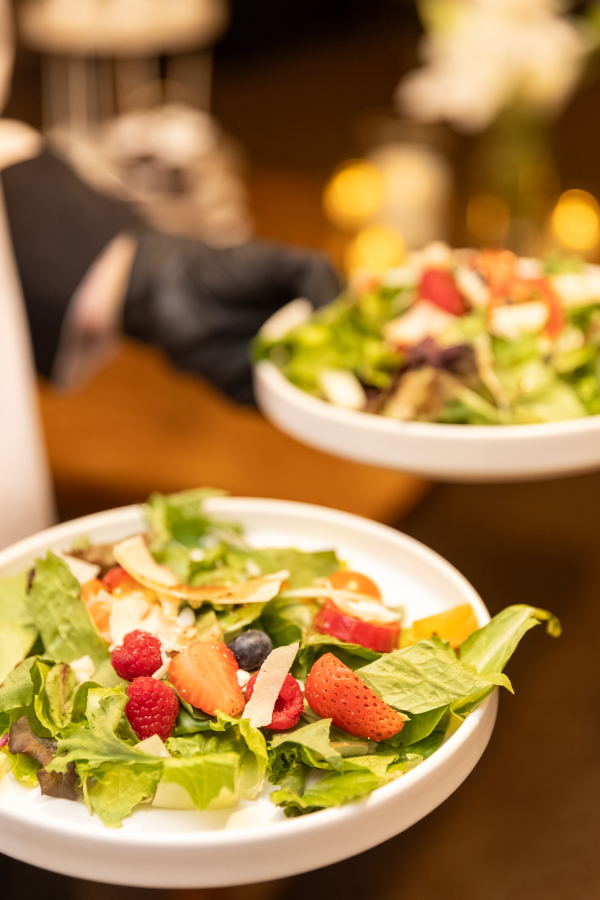
A plated dinner is one of the most traditional wedding meal service styles. Guests remain seated while servers deliver individually prepared courses to each place setting.
A plated meal may include a preset salad, one main entrée for everyone, or multiple entrée selections collected through the RSVP process.
A plated dinner may be right for you when:
- You want the reception to feel elegant, formal, or highly organized.
- You would like guests to remain seated throughout dinner.
- Your venue has sufficient kitchen and service capabilities.
- You have a structured reception timeline with speeches, toasts, or formalities during the meal.
- You want portion sizes and presentation to remain consistent.
- Your guest count and catering team can support the required level of service.
Benefits of plated service
Plated service can create a polished and elevated dining experience. Guests do not need to stand in line or carry plates back to their seats, and the catering team has greater control over presentation and portioning.
It can also make it easier to incorporate toasts, speeches, and formal reception moments because most guests remain seated.
Considerations for plated service
A plated meal usually requires more service staff than a buffet, particularly when serving a large guest count efficiently.
Your catering team will also need accurate meal selections, seating assignments, and a reliable way to identify each guest’s entrée choice. This may require place cards, escort cards, meal-indicator symbols, or a detailed seating chart.
Plated service can also take longer when multiple courses are included or when the venue has limited access between the kitchen and reception area.
If you choose plated service, ask your caterer how long they anticipate each course taking and how meal selections should be communicated.
Option Two: Buffet Service
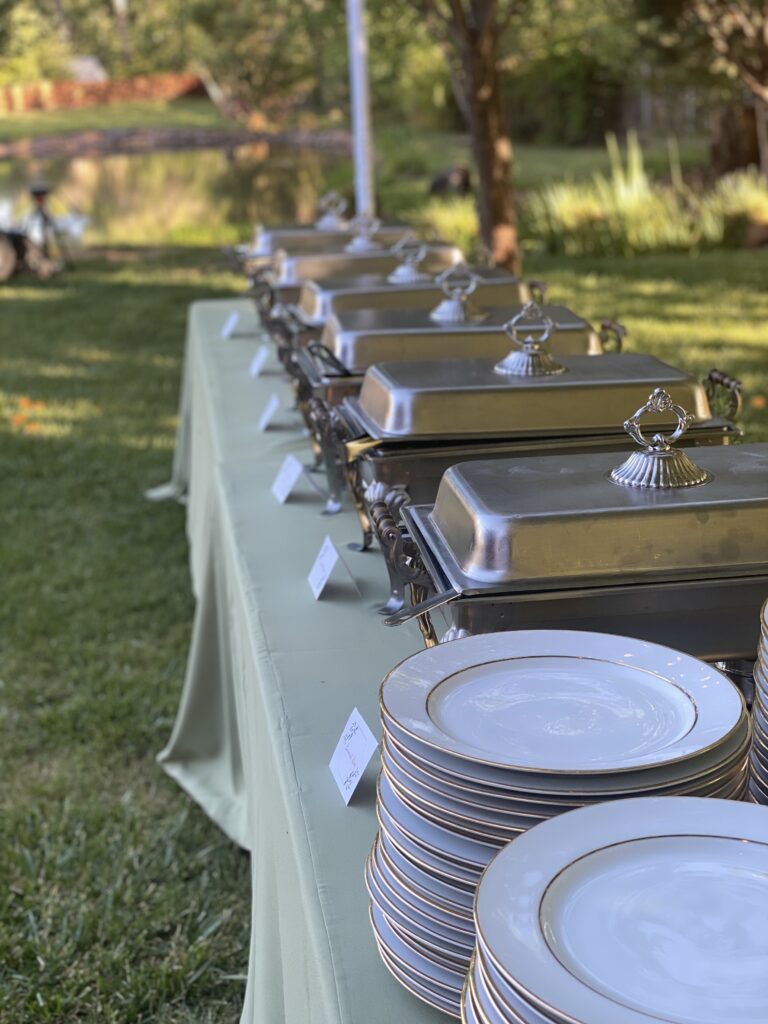
With buffet service, food is arranged on one or more serving tables, and guests move through the buffet to select their meal.
The catering team may serve some items, or the buffet may be partially self-serve depending on the menu and event setup.
A buffet may be right for you when:
- You want guests to have flexibility and variety.
- You prefer a relaxed or approachable dining atmosphere.
- You would like guests to choose their own portions.
- You want to offer several entrée or side options without collecting meal choices in advance.
- Your venue has enough room for an efficient buffet setup.
- Your timeline can accommodate releasing tables in organized groups.
Benefits of buffet service
Buffets give guests more control over what and how much they place on their plates. They can be especially helpful when offering a variety of proteins, sides, sauces, or dietary options.
A buffet can also eliminate the need to collect individual entrée selections during the RSVP process.
When designed well, a buffet can still feel beautiful, intentional, and elevated. Attractive serving pieces, thoughtful signage, professional attendants, and a well-planned layout can make the buffet part of the event design.
Considerations for buffet service
Guest flow is one of the most important factors in a successful buffet.
For larger weddings, a single buffet line can create a lengthy wait. Your caterer may recommend a double-sided buffet, duplicate stations, or multiple service points to move guests through efficiently.
You will also need a plan for releasing tables. Allowing every guest to approach the buffet at once can quickly create congestion.
Buffet tables also require space within the venue. Make sure the layout leaves enough room for guests to move comfortably without crowding dining tables, the bar, or major walkways.
A buffet is not automatically less expensive than a plated dinner. Pricing depends on the menu, staffing, equipment, quantity of food, venue layout, and service requirements.
Option Three: Family-Style Dinner
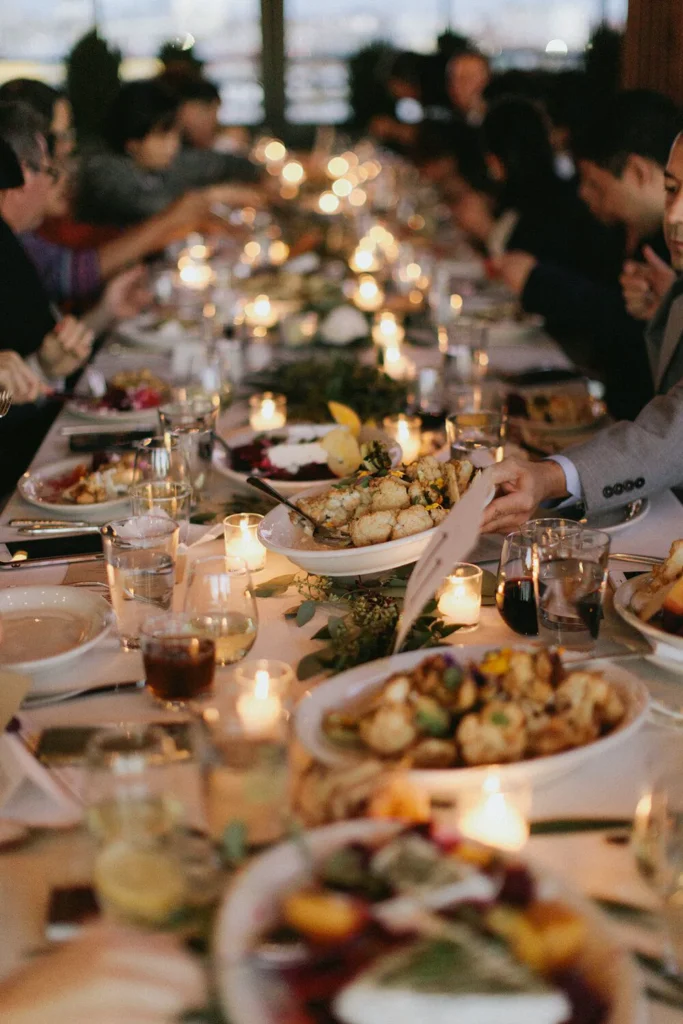
Family-style dining combines elements of plated and buffet service. Guests remain seated while large platters and bowls are delivered to each table. Guests then pass the dishes and serve themselves.
This service style can feel warm, abundant, and communal.
Family-style service may be right for you when:
- You want dinner to feel intimate, social, and welcoming.
- You love the idea of guests sharing food around the table.
- Your menu includes dishes that can be presented and passed easily.
- You have enough room on each table for serving platters.
- You are comfortable with guests determining their own portions.
- Your catering and rental budgets can accommodate additional serving pieces and staffing.
Benefits of family-style service
Family-style dining encourages conversation and interaction. It can create the feeling of a shared dinner party, even at a larger wedding.
Guests can sample multiple dishes without leaving their seats, and the presentation of abundant platters can feel especially inviting.
It works beautifully for rustic, Italian-inspired, Mediterranean, farm-to-table, or relaxed luxury celebrations, although it can be adapted to many different wedding styles.
Considerations for family-style service
Table space is often the biggest challenge.
Large floral arrangements, candles, glassware, chargers, bread plates, favors, and serving platters all compete for room. Before choosing family style, your planner, caterer, florist, and rental company should confirm that the table design can accommodate the meal.
You may need to simplify centerpieces, use wider tables, or reduce the number of decorative items at each place setting.
Family-style service may also require more food than plated service because each table needs enough of every dish. Additional platters, bowls, serving utensils, and staff may also affect the cost.
This style works best when guests are comfortable passing dishes. It may be less practical for guests with mobility limitations, very formal place settings, or tightly packed tables.
Option Four: Food Stations
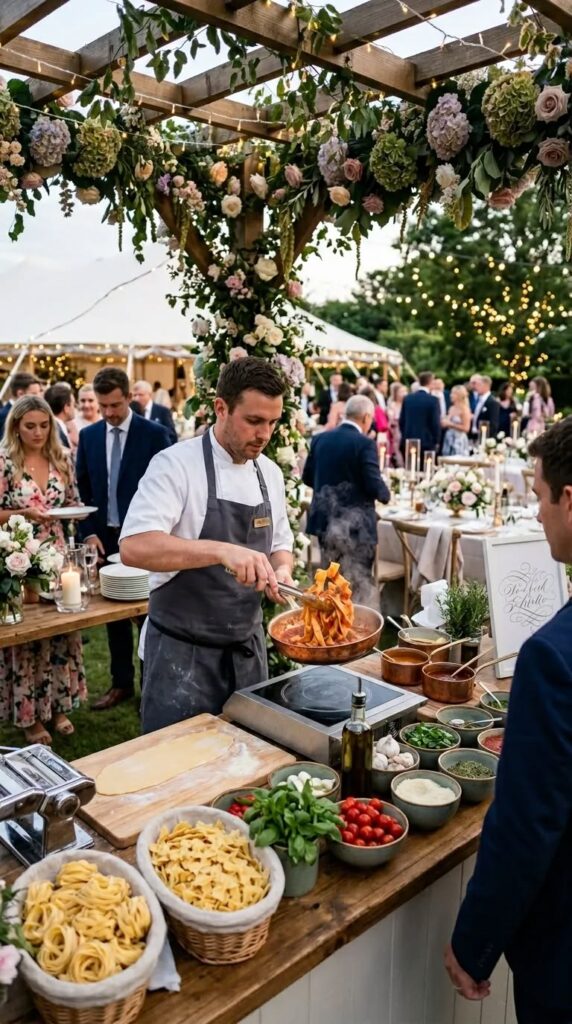
Food stations feature several smaller serving areas placed throughout the reception. Each station may offer a different cuisine, dish, or experience.
Examples might include a carving station, pasta station, taco station, slider station, seafood station, salad station, or made-to-order culinary display.
Food stations may be right for you when:
- You want dinner to feel interactive and energetic.
- You would like to offer several cuisines or menu experiences.
- You prefer a less structured reception.
- Your venue has enough room to distribute stations thoughtfully.
- You want guests to mingle during the meal.
- Your guest count supports multiple stations without excessive waiting.
Benefits of food stations
Stations can turn the meal into an experience. Guests can explore the room, choose what interests them, and return for additional selections.
They can also help accommodate a wide range of preferences by providing variety.
When positioned strategically, multiple stations can reduce the appearance of one long buffet line and encourage guests to use different areas of the reception space.
Considerations for food stations
Stations require careful planning. If one station is significantly more popular than the others, guests may still experience long waits.
The menu must also be substantial enough to constitute a full meal. A collection of small bites may sound plentiful on paper but leave guests hungry if quantities and portion sizes are not carefully calculated.
Some stations require chefs or attendants, specialty equipment, power access, ventilation, or additional rentals. Those elements can increase staffing and production costs.
Your planner and caterer should also consider whether the stations will remain open for a set period or throughout most of the reception.
Option Five: Heavy Hors d’Oeuvres or Cocktail-Style Reception
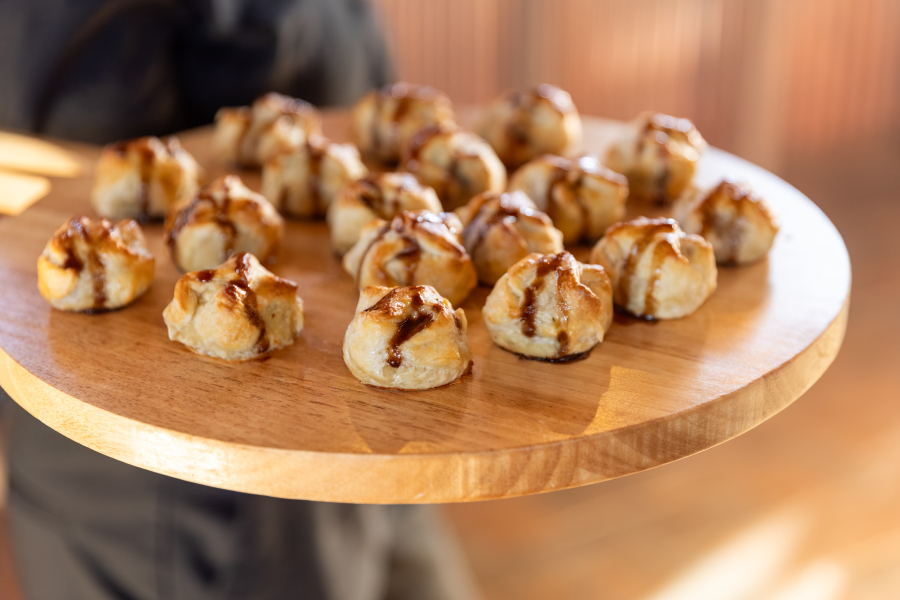
A heavy hors d’oeuvres reception replaces a traditional seated meal with a substantial selection of passed appetizers, displayed bites, small plates, or food stations.
The key word is heavy. If the reception takes place during a normal meal period, guests will expect enough food to feel fully satisfied.
A cocktail-style reception may be right for you when:
- You want a lively, social, and less traditional celebration.
- You prefer mingling over a long seated dinner.
- Your menu includes a wide variety of substantial small bites.
- Your venue is well suited for lounges, cocktail tables, and flexible seating.
- You plan to offer enough food throughout the reception.
- You are comfortable with a less structured meal period.
Benefits of a cocktail-style reception
This format encourages guests to move, socialize, and experience different areas of the event.
It can be especially effective for shorter weddings, modern celebrations, art-gallery venues, rooftop events, or receptions centered around entertainment and conversation.
The menu can also be creative and varied, allowing you to incorporate several flavors without committing to a traditional entrée.
Considerations for a cocktail-style reception
Do not assume that a cocktail-style reception automatically requires less food or costs less than dinner.
Passed appetizers are labor-intensive, and producing many small items can require significant preparation and staffing. If stations, displays, rentals, and attendants are added, the cost may be similar to—or greater than—a traditional meal.
You must also provide enough seating. Even when the goal is mingling, older guests, pregnant guests, guests with disabilities, and anyone wearing formal shoes may want to sit.
A mixture of dining tables, lounge furniture, cocktail tables, and standard chairs usually creates the most comfortable experience.
Be clear in your invitation wording and wedding communication so guests understand what type of meal to expect.
Questions to Ask Before Choosing Your Service Style
Once you understand the basic options, evaluate each one through the lens of your actual event.
1. What is our wedding atmosphere?
A black-tie celebration, casual backyard wedding, destination weekend, and modern cocktail reception may each call for a different dining experience.
Your meal service should feel consistent with the rest of the event.
2. How many guests are we inviting?
A service style that works beautifully for 40 guests may become challenging for 200 guests.
Ask your caterer how they would manage your specific guest count. For example, a large buffet may require duplicate lines, while plated service may require a larger team to serve everyone promptly.
3. What does our venue allow?
Your venue may affect the decision more than you expect.
Consider:
- Kitchen access
- Distance between the kitchen and reception space
- Available power
- Indoor and outdoor access
- Weather backup plans
- Space for buffets or stations
- Table sizes
- Loading and service routes
- Venue rules regarding open flames or live cooking
A beautiful idea still needs to function within the venue.
4. What type of menu are we serving?
Some dishes are ideal for plated service, while others hold especially well on a buffet or are naturally suited to family-style presentation.
Ask your caterer how each menu item performs over time. Foods that need to remain crisp, delicate, or precisely cooked may require a different service approach than braised meats, roasted vegetables, pastas, or composed salads.
5. How important is guest choice?
Do you want guests to choose between several options, or are you comfortable serving one thoughtfully selected meal?
Buffets and stations provide flexibility. Plated dinners offer consistency. Family style allows guests to sample several dishes, although quantities are shared among the table.
6. How formal do we want dinner to feel?
Formality is not only determined by food.
Service style, linens, place settings, table design, staff attire, menu presentation, and the timing of each course all contribute to the feeling of the meal.
A buffet can still be elegant, and a plated dinner can still feel relaxed. Consider the full picture rather than relying on labels.
7. What is realistic for our budget?
Ask your catering team for the complete cost of each service style—not only the price of the food.
The final investment may include:
- Servers
- Chefs
- Bartenders
- Captains
- China
- Flatware
- Glassware
- Linens
- Buffet tables
- Serving pieces
- Chafing equipment
- Specialty equipment
- Setup
- Breakdown
- Transportation
- Rentals
- Gratuity or service charges
Comparing complete proposals will give you a much clearer picture.
8. How does the service style affect our timeline?
Every service style requires time.
A plated multi-course dinner may take longer than a single-course meal. A buffet must be released table by table. Family-style platters need to be placed and replenished. Stations may remain open for a longer dining window.
Ask how the meal will interact with:
- Toasts
- First dances
- Parent dances
- Sunset photos
- Cake cutting
- Entertainment
- Transportation
- Venue end times
Your meal should support the reception flow rather than interrupt it.
9. What will be most comfortable for our guests?
Consider the ages, mobility needs, dietary restrictions, and expectations of your guests.
A service style that requires standing in line or balancing small plates may be difficult for some attendees. A long plated dinner may feel too formal for others.
Guest comfort does not mean you must abandon your vision. It simply means creating a thoughtful plan.
Can You Combine Service Styles?
Absolutely.
Many weddings use a combination of service styles to create variety and support the event timeline.
For example:
- Passed hors d’oeuvres during cocktail hour followed by a plated dinner
- A plated salad followed by a buffet entrée
- Family-style dinner with a plated dessert
- Food stations for dinner followed by a late-night snack display
- A buffet with chef-attended carving or pasta stations
- A cocktail-style reception with passed appetizers and two substantial food stations
A hybrid approach can provide the best features of several formats. It can also create additional complexity, so make sure your planner and catering team coordinate the flow carefully.
Common Mistakes to Avoid
Choosing based only on price
The least expensive-looking option is not always the least expensive once staffing, rentals, food quantities, and equipment are included.
Forgetting about the venue layout
Buffets and stations need physical space. Family-style service needs table space. Plated service needs efficient access from the kitchen.
Underestimating the timeline
Serving a large number of guests takes time, regardless of the format. Build realistic service time into the reception schedule.
Offering too many choices
More options do not always create a better experience. An overly large menu may increase cost, complicate service, and slow down the meal.
A focused, well-executed menu is often more memorable than an extensive one.
Not providing enough seating
Cocktail-style does not mean seat-free. Guests need comfortable places to rest and eat.
Failing to communicate dietary restrictions
Your caterer should receive dietary information well before the wedding. Make sure there is a clear plan for identifying and serving guests with allergies or special meal needs.
So, Which Wedding Service Style Is Best?
The right choice is the one that supports your celebration as a whole.
Choose plated service when you want a polished, structured, and seated dining experience.
Choose a buffet when variety, flexibility, and a relaxed atmosphere are important.
Choose family style when you want dinner to feel warm, abundant, and communal.
Choose food stations when you want an interactive experience with multiple flavors and opportunities for movement.
Choose a heavy hors d’oeuvres reception when you want a social, cocktail-inspired celebration and are prepared to provide enough substantial food and seating.
Most importantly, involve your caterer and planner in the decision. They can help you evaluate your menu, venue, guest count, budget, and timeline so your service style is not only beautiful in theory, but successful in practice.
Your wedding meal should feel like a natural extension of your celebration—delicious, welcoming, and thoughtfully designed around the people gathered to celebrate with you.
Need Help Planning the Rest of Your Wedding?
Choosing your catering style is only one of the many decisions that will shape your wedding experience.
Inside the Master the Wedding community, couples can follow a step-by-step Wedding Roadmap with professional guidance, planning tools, educational resources, and support for decisions involving the budget, guest list, venue, vendors, design, timeline, and wedding-day logistics.
And when you are ready to explore catering options for your Arizona wedding or event, we would love to learn more about what you are planning.

Casey Green Weddings, LLC
hello@caseygreenweddings.com



+ show Comments
- Hide Comments
add a comment